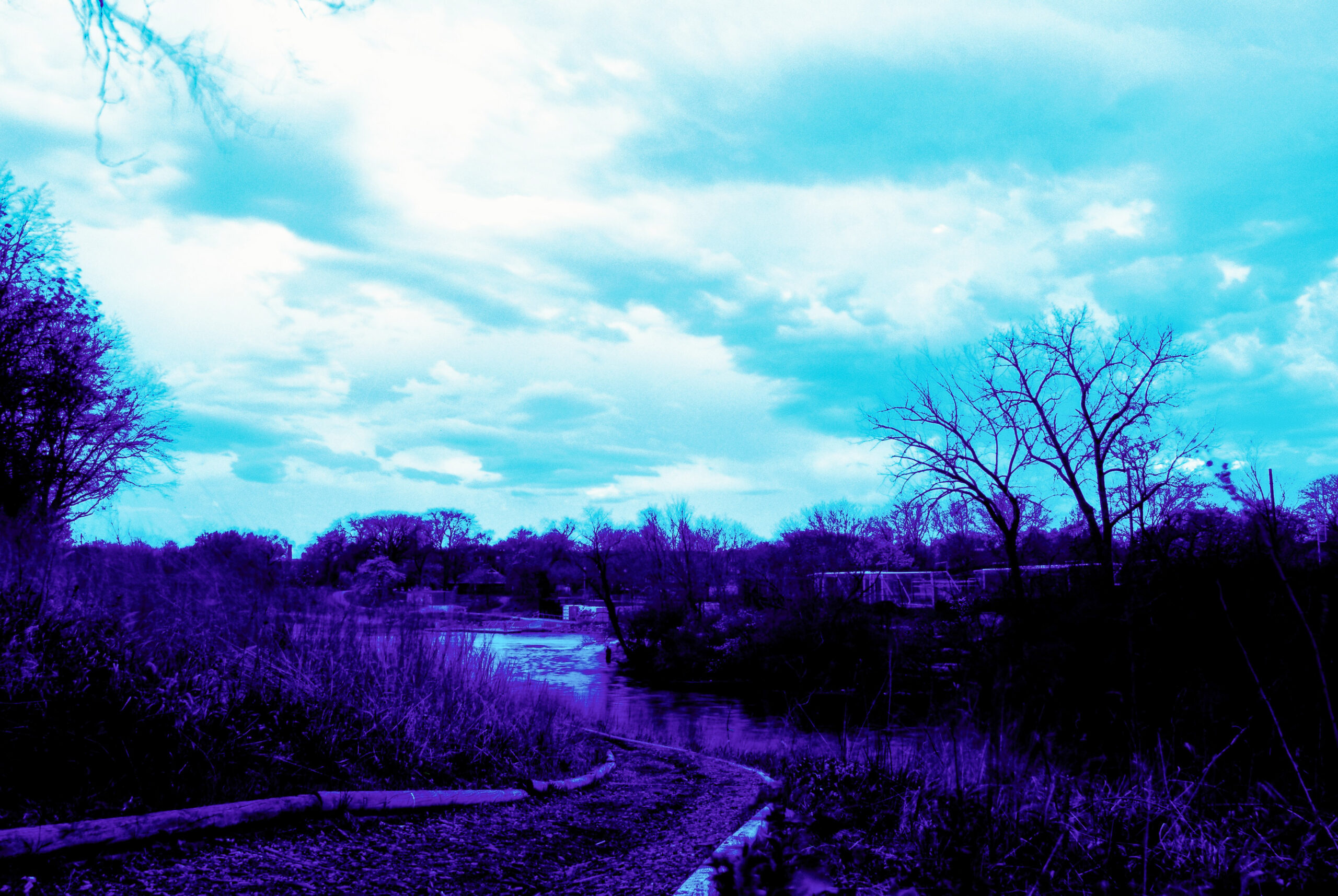
This is a bit of a weird one, even for me.
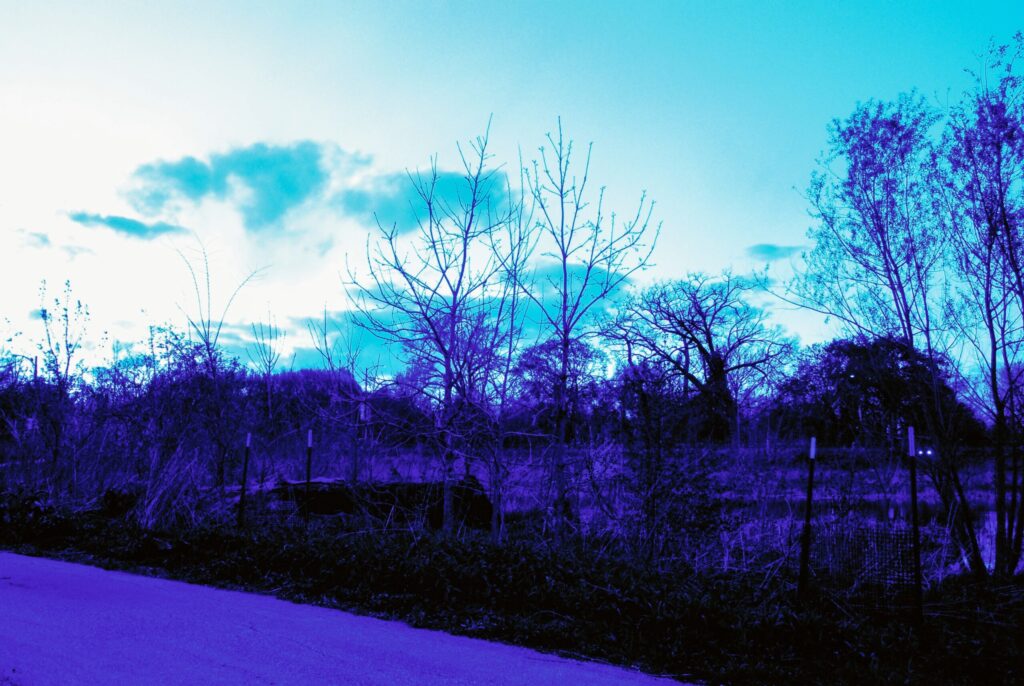
The siren song of KONO! Donau II had been calling my lomo hipster ass for months before I finally gave in and purchased a roll.
As promised, I’ve been dipping my toes into low-ISO films, and Donau seemed like as good a place as any to start. It’s stated ISO of 8 is at least within the confines of what my Elan 7 can meter for, and shooting it gave me an idea of what apertures and shutter speeds I can expect under a variety of lighting conditions.
Finding reviews of this film was harder than expected, and what is out there is largely about the original Donau that was released in 2015. You Google this film, you get a lot of for-sale pages, and then a bunch of Redditors complaining about the manufacturer adding a blue cast to this film.
The latter gave me pause. The other low-ISO films I’ve looked into all have a blue cast too, but not for lomographic purposes. Rather, they’re technical films designed for things like duplicating film that has an orange mask. So I did a little digging.
Sure enough, Petapixel and DIYPhotography both state this is a technical film as well- but for use in transferring digital images to film in cinema post-production. I had no idea that was a thing!
Technical origins or not, though, I suppose shooting it as photographic film still makes me a hipster.
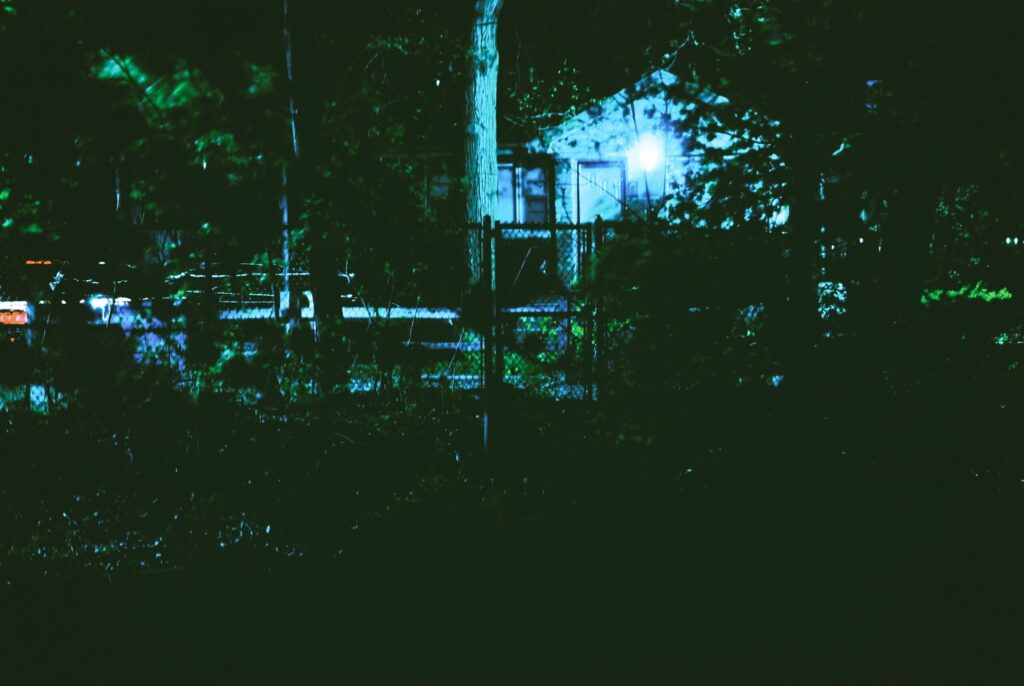
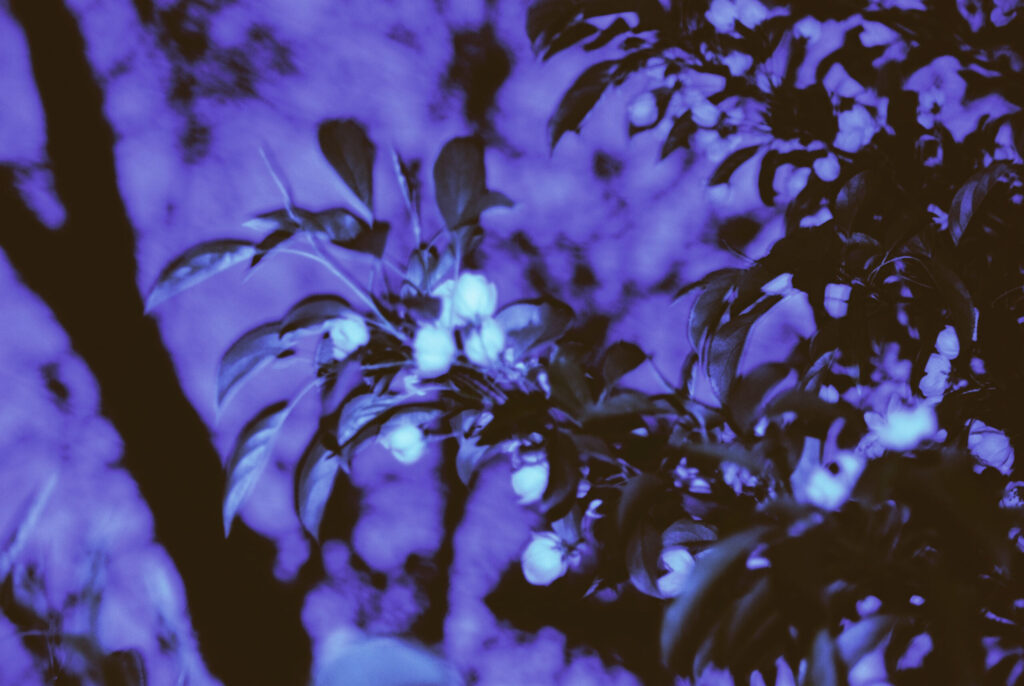
The above shot was my longest exposure, at five minutes. Five minutes was clearly not enough, but I still think this film has promise for night photography.
My shortest exposure was 1/125 sec:
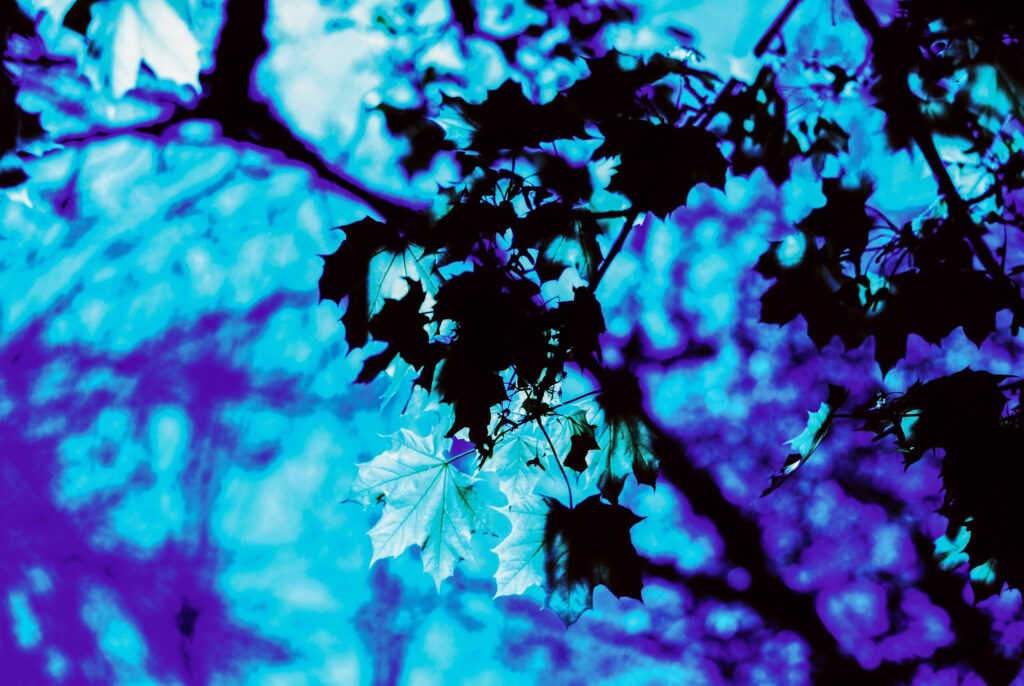
This was one of a handful of shots I took handheld on a bright sunny day in late morning. I think I exposed it as best I could. Sure, the shadows are pure black, but the highlights are pure white too, because that’s just how this film rolls.
I didn’t edit these, because what was I going to do, increase the contrast and saturation? Even for me, a known Phoenix apologist, these scans are punchy enough as it is. (I did crop and rotate a couple frames that had a mean lean, though- composing in dim lighting is hard!)
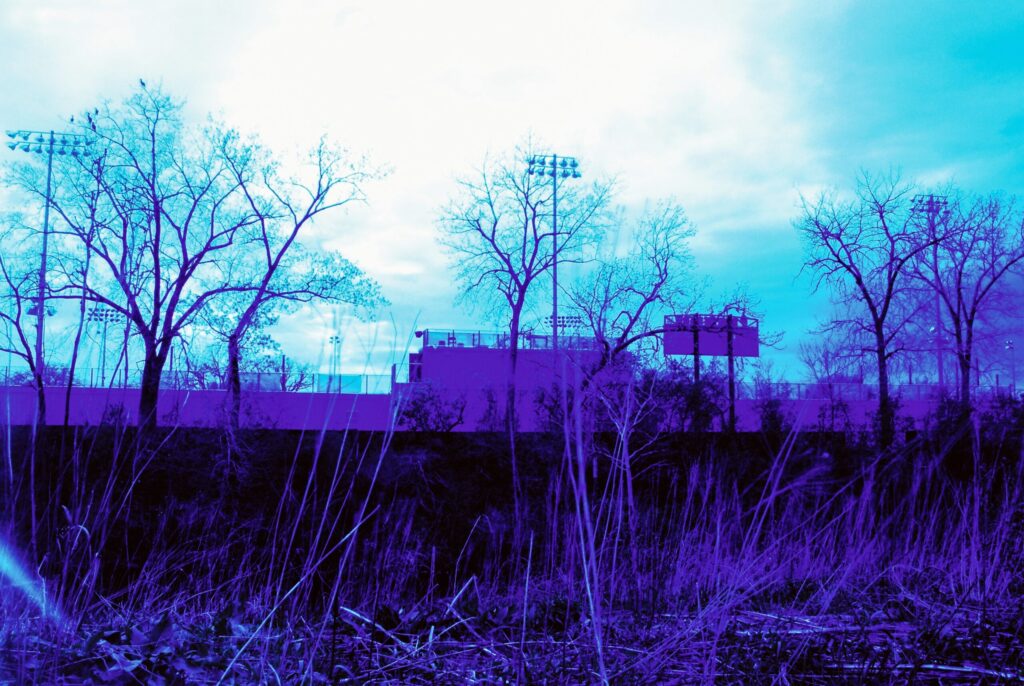
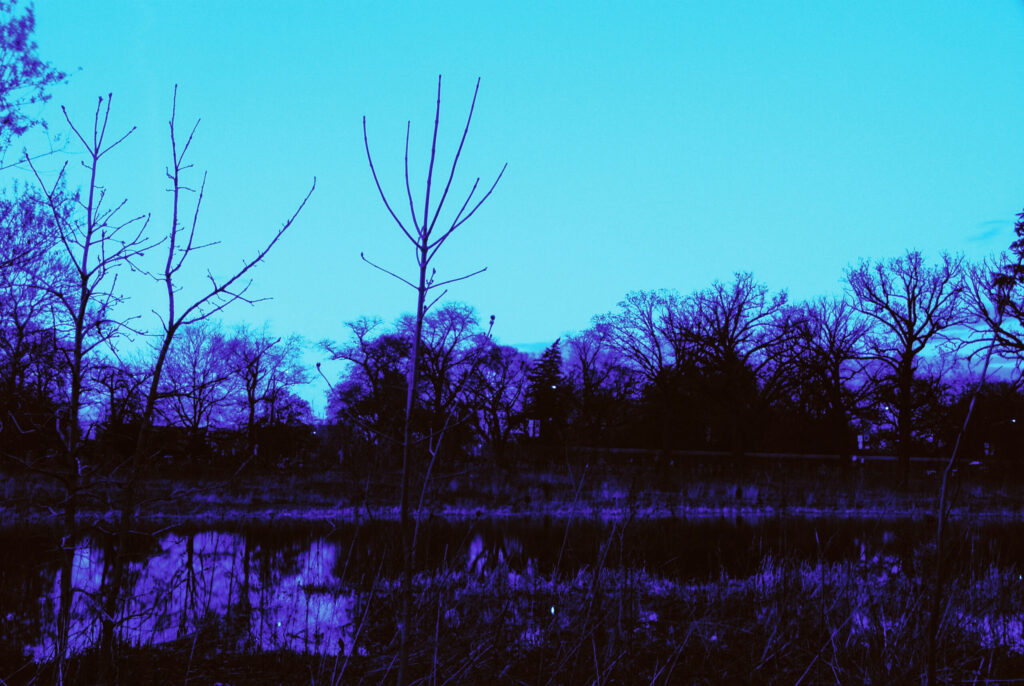
I started things off with some landscape-y shots, which made up about a third of my roll. I’m going to go out on a limb here and say that detailed landscapes are not, in fact, this film’s strong suit.
Low-ISO films tend to have high resolution- but how far is that resolution really getting me here? Donau II definitely can capture detail, given enough light and the right aperture, but a lot of depth is lost to the limited color palette of this film.
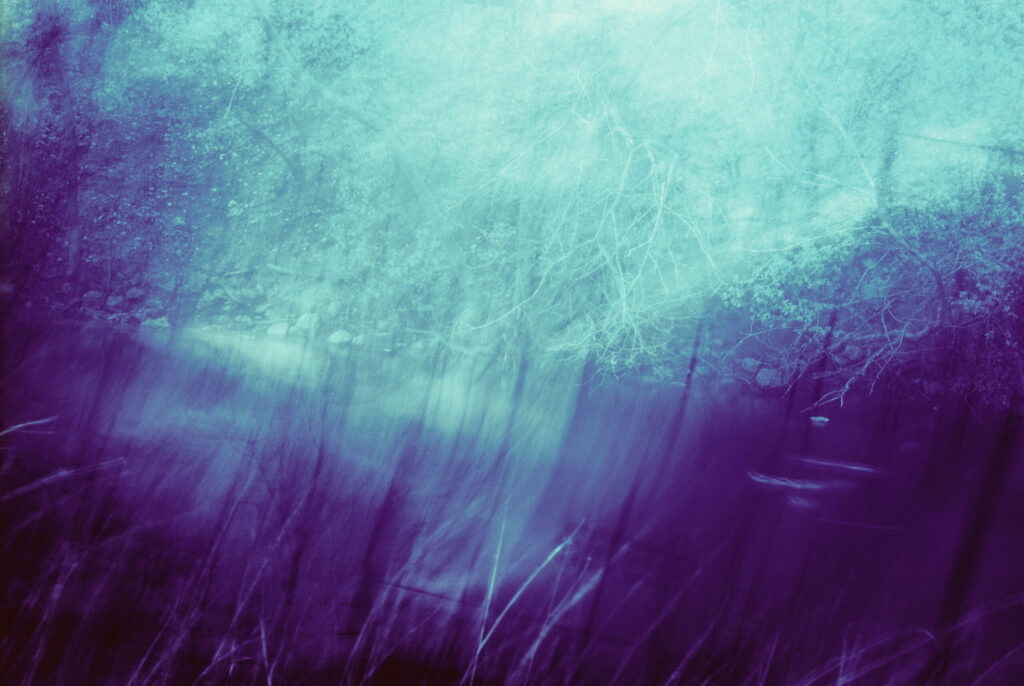
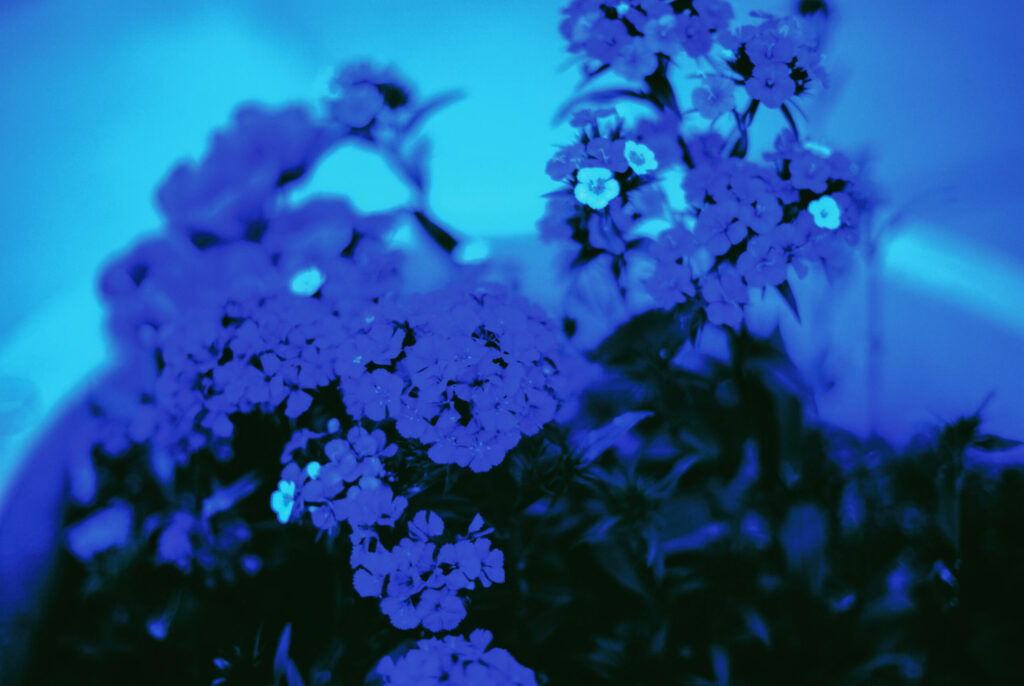
And boy, is it limited. I’ve shot redscale films with more range. For the most part, the colors you get are: white, black, blue, purple. End of list. Luckily, those are all excellent colors. Even this accidental shot looks like it should be an album cover:
There were frames where I got greens and even reds- interestingly, the biggest range of colors was in that underexposed night photo above. I’m not sure why, but that’ll be something worth exploring for my next roll.
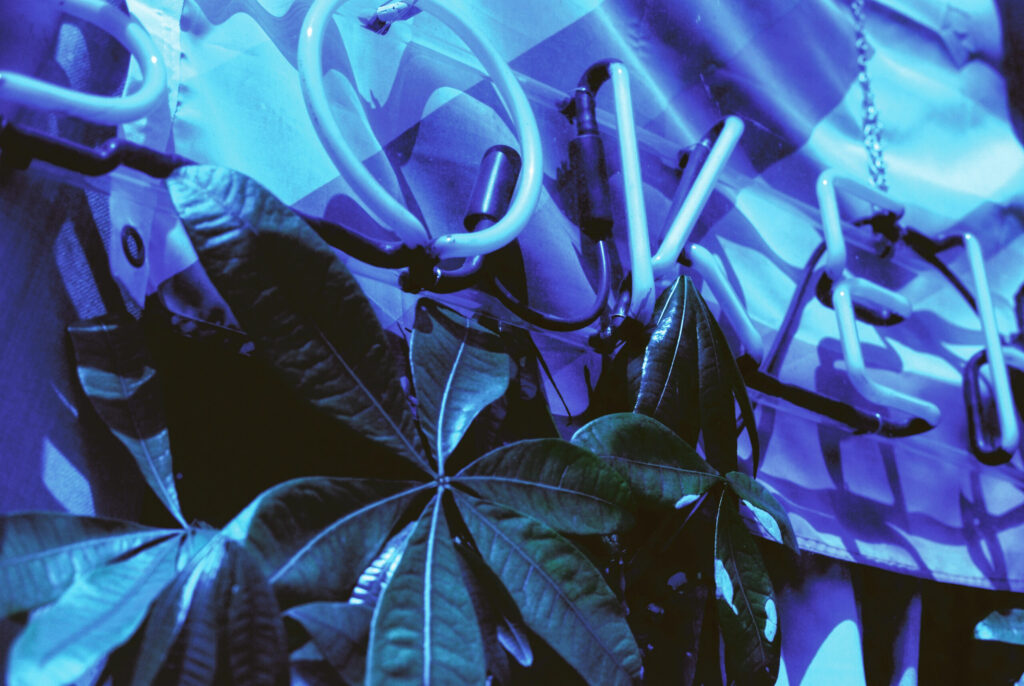
I didn’t calculate reciprocity for these because frankly, I had no idea how I’d even do that for an ISO 8 film. I’m honestly not sure whether that was the right call. I did have a handful of underexposed shots, but I suspect that was more of a metering issue (aka skill issue on my part) than anything else. For example:
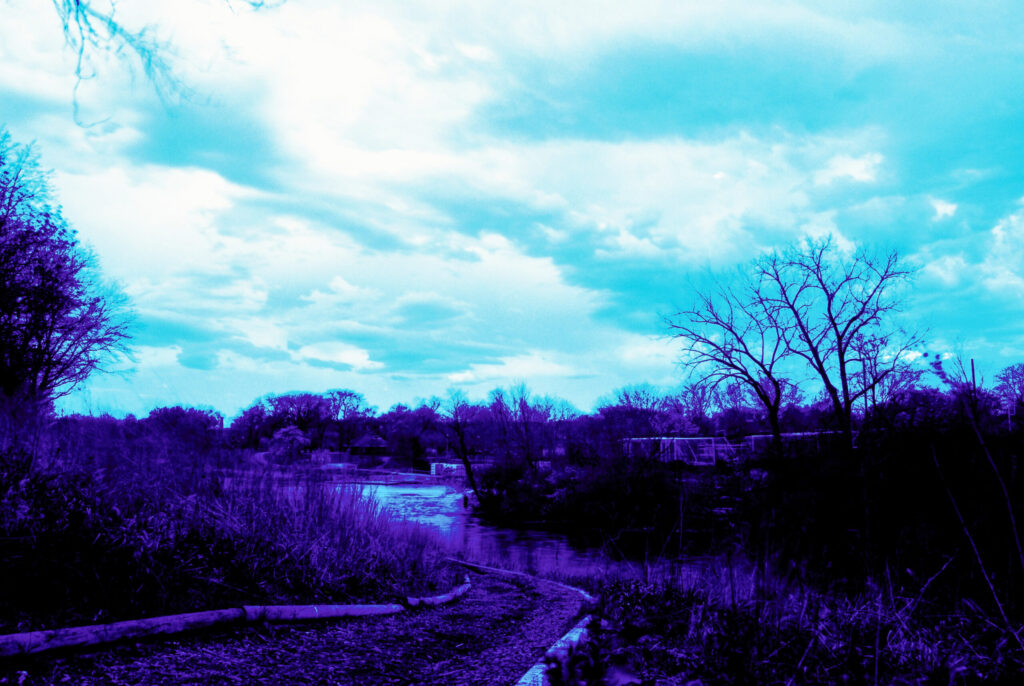
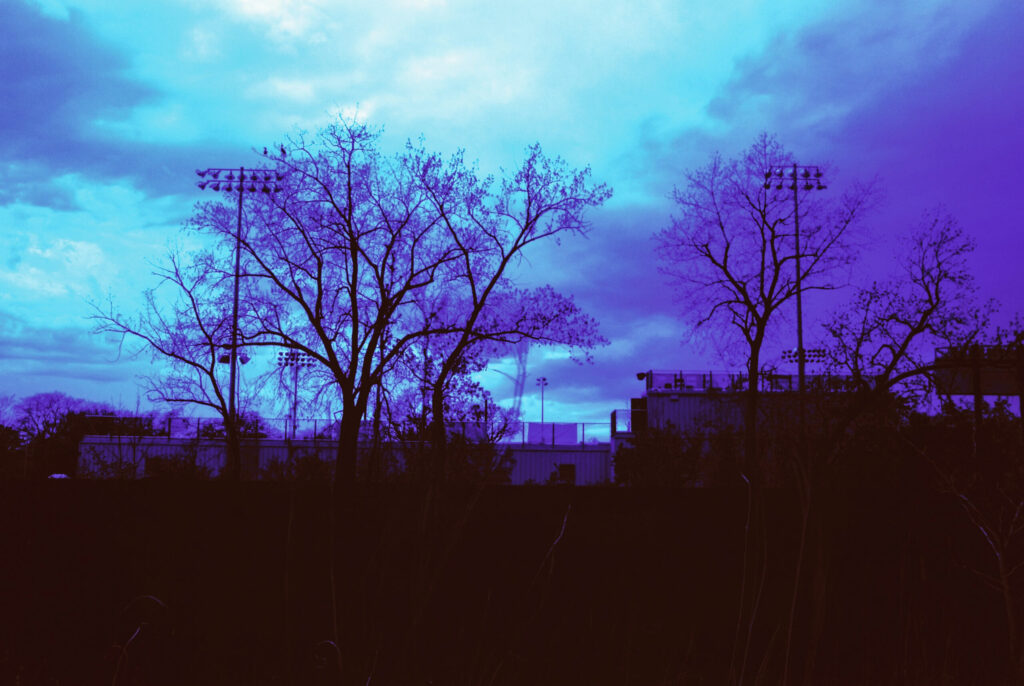
This was two seconds (left) and 1/2 second (right), both at f/22, within minutes if not seconds of each other. I’m not sure why I even believed my camera’s meter on that second one. Note the red shadows.
Then, I immediately turned around and made the same mistake with my next two shots:
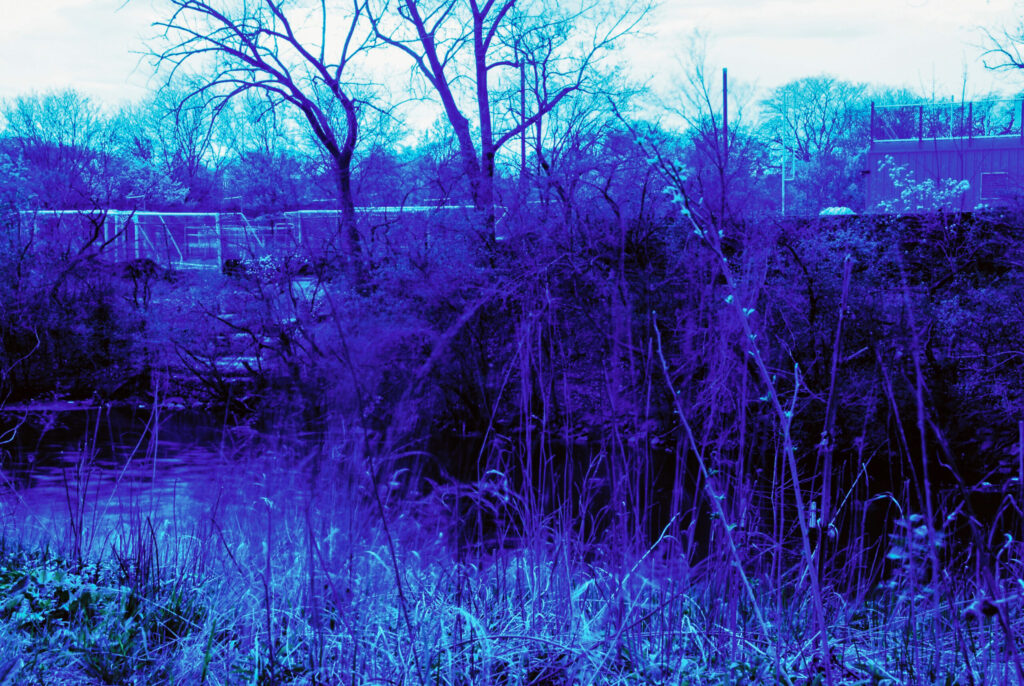
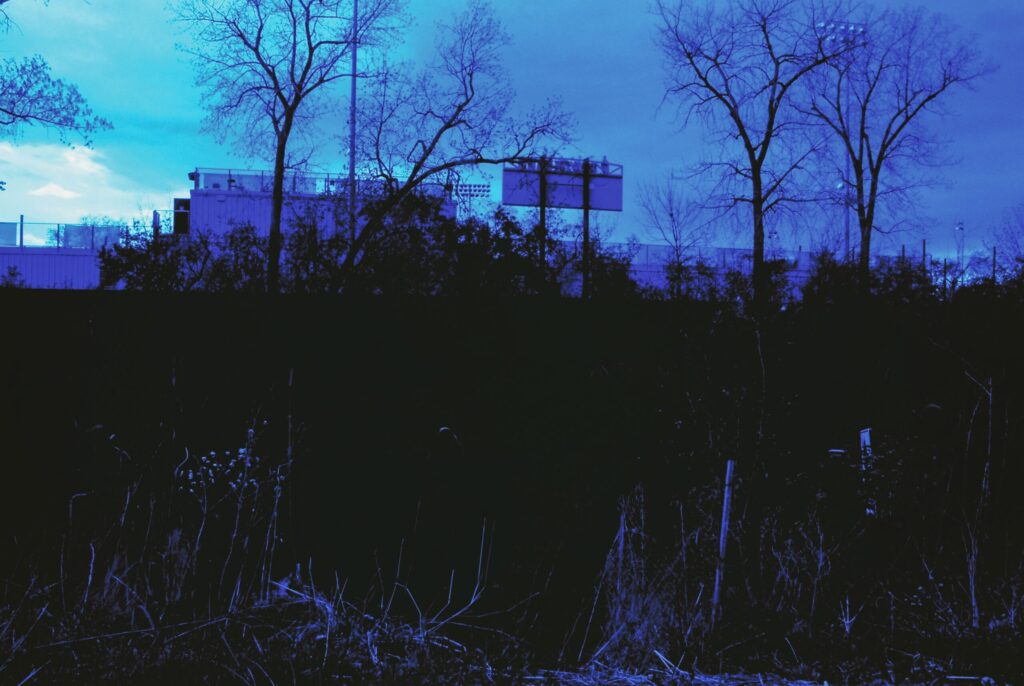
These are two seconds at f/16 (left), and one second at f/19 (right). I mean, come on. It’s the same damn river, Parker! Turning slightly to the right doesn’t change the scene that much, even if your camera’s telling you otherwise.
This article from Fstoppers suggests the grey-green shadows on the sample photos are a sign of reciprocity failure- but that reciprocity failure usually causes a grey-red effect. That article was about the original Donau, but it did make me wonder about my red shadows.
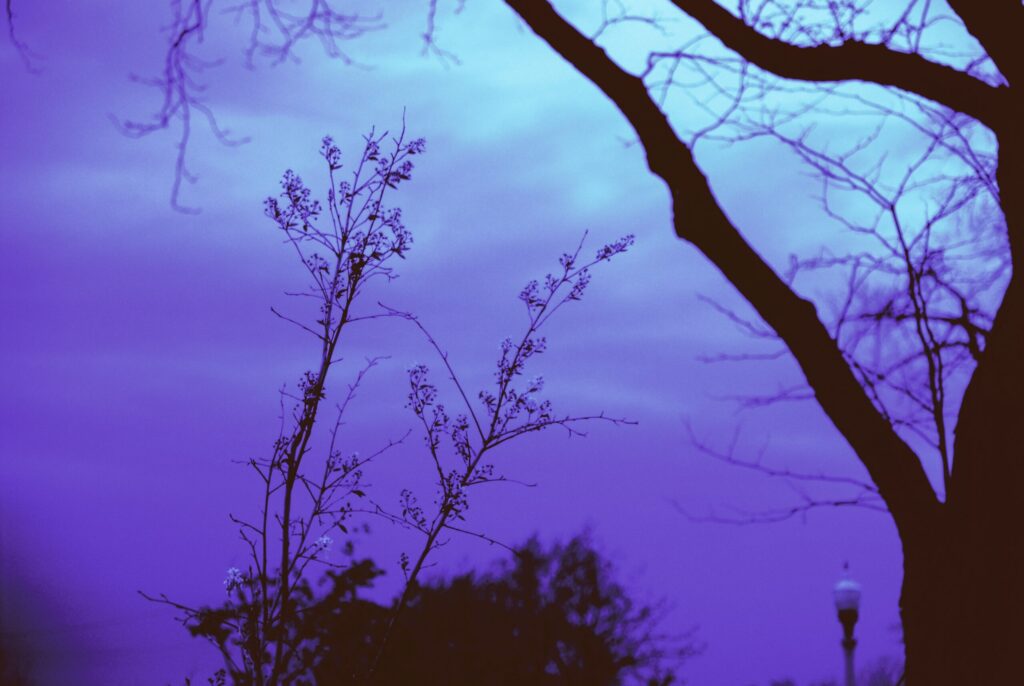
Then again, the photos above were actually some of my shorter exposures (both well below 1 second), and the only times my shadows went even slightly green were in my night photos. I suspect the red might just have been regular ol’ underexposure.
The day I was shooting at the river, it was just about to storm, and the clouds were an intense blue-grey. On one hand, it was probably a waste not to be shooting a film that could actually capture that color. On the other hand, it did produce some intense turquoise patches in a sky that the Donau would have completely blown out otherwise.
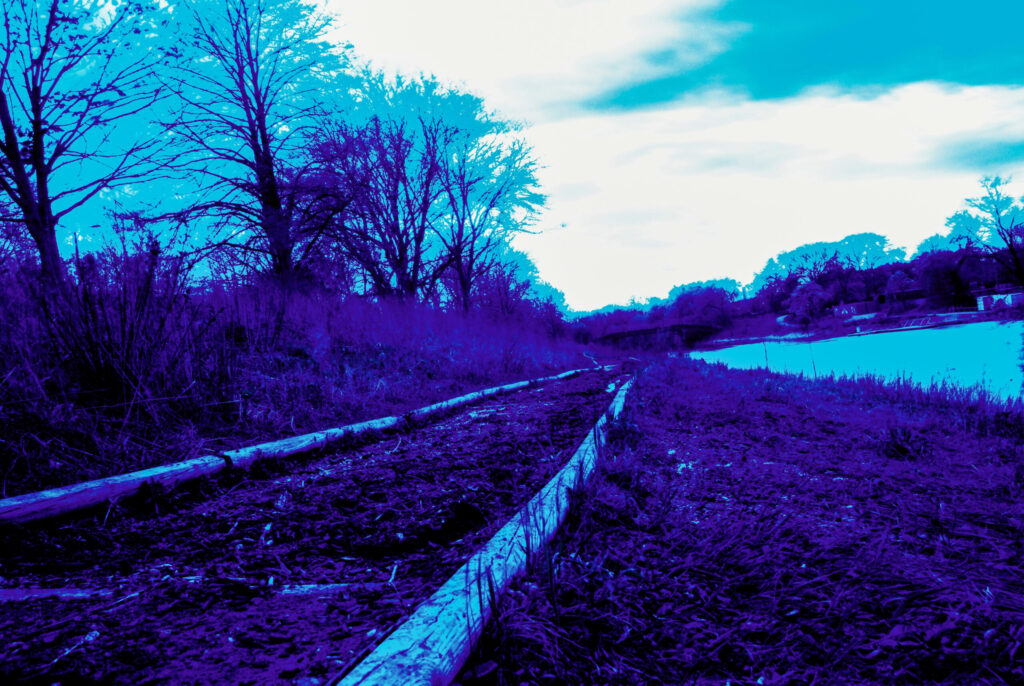
Seriously, this was anything but a high-contrast scene.
I also took this cloudy day as a chance to test out my camera’s built in flash, which I haven’t used much.
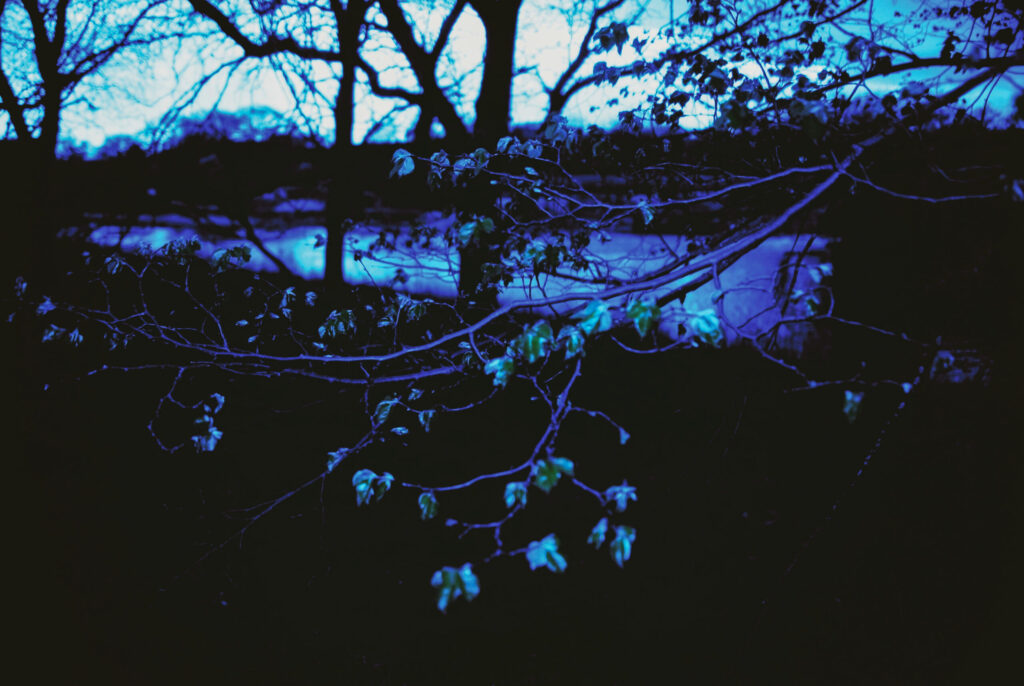
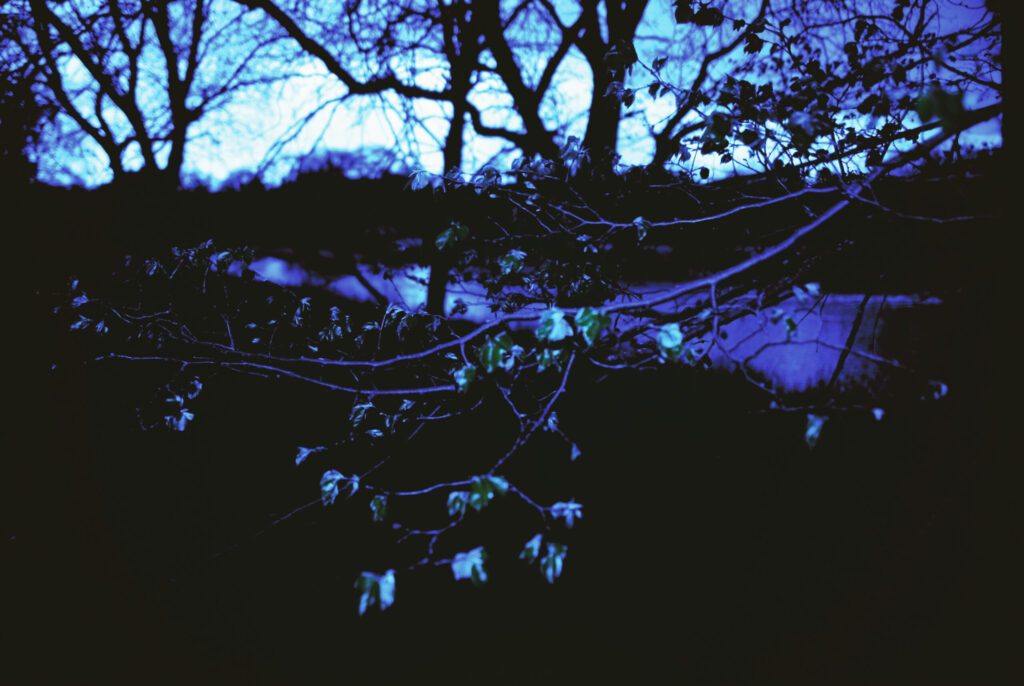
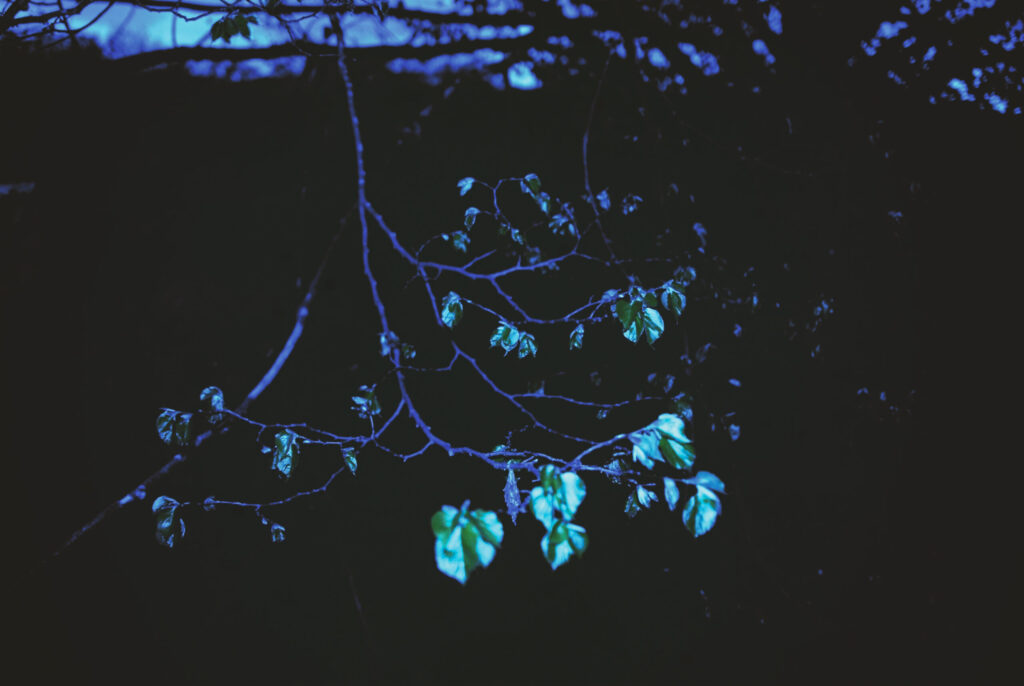
There were all 1/20 sec at f/3.5, which was about three stops underexposed. This left the background as pure black, but the subject has enough light for my taste, so shoutout to my Elan’s flash.
After one final shot of the river, the rain finally started up and I called it a day.
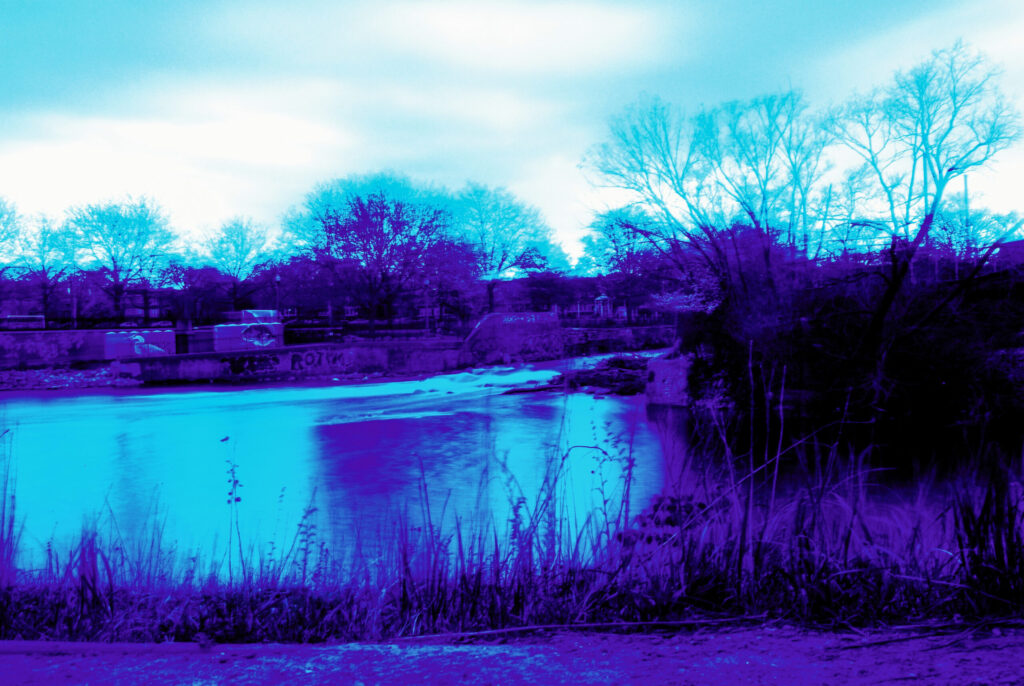
Actually, it started lightly raining at the beginning of this twenty-second exposure. I decided to wait it out, and I’m glad I did. There’s a dreamy softness to this image that I really like. After that it really started pouring though, but I got lucky and was able to shove everything into a waterproof bag just in time!
The next set are from a couple days later, when it was finally sunny enough to try the Donau handheld.
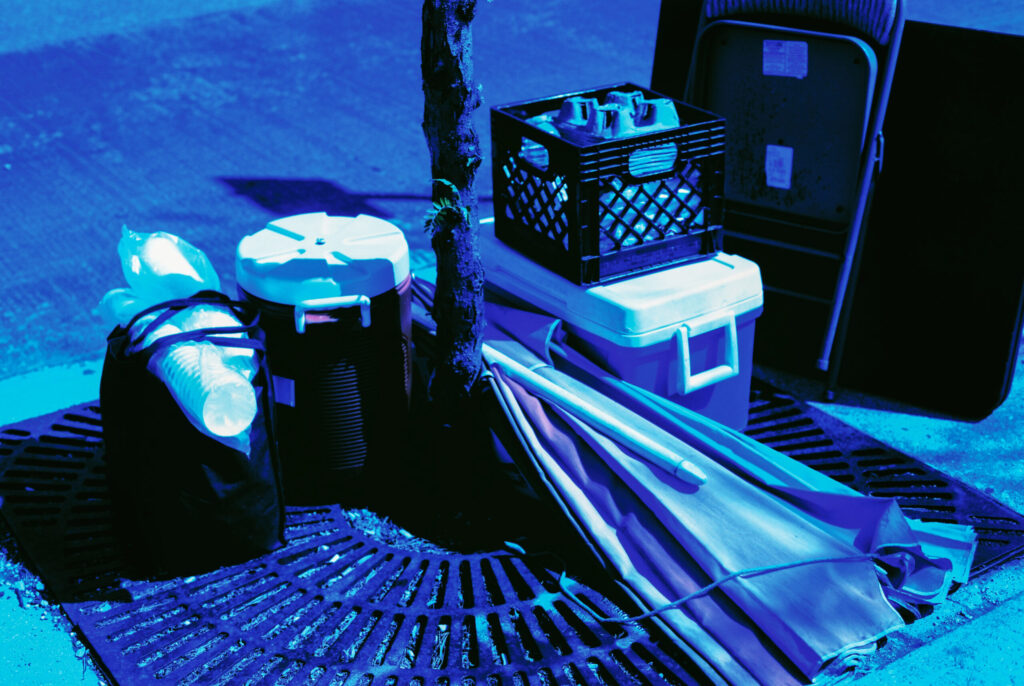
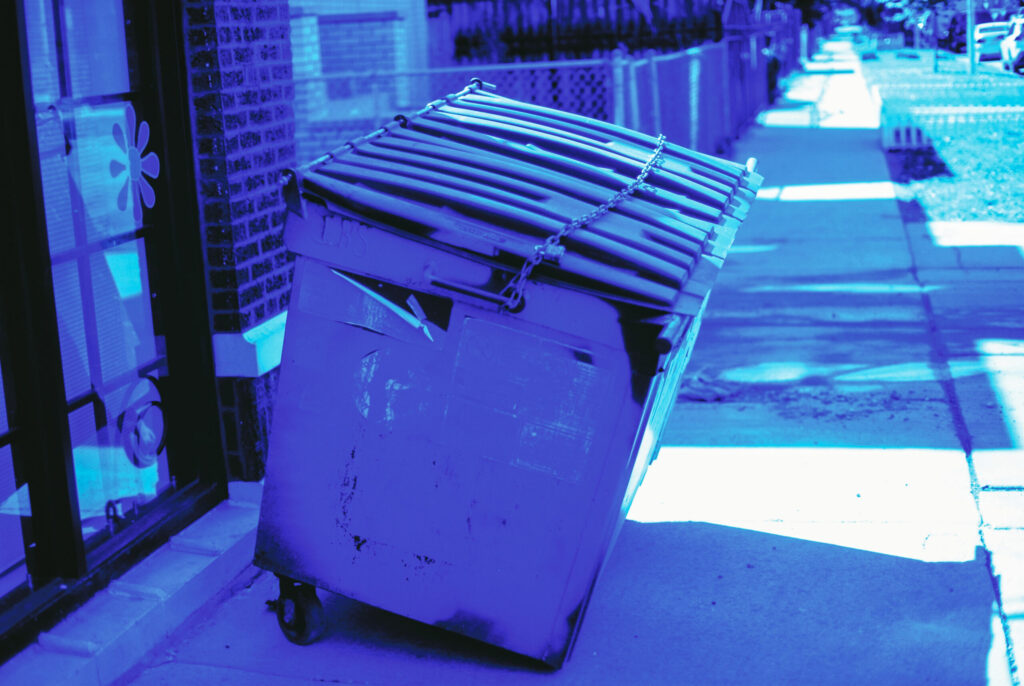
This was probably my favorite shot of the roll:
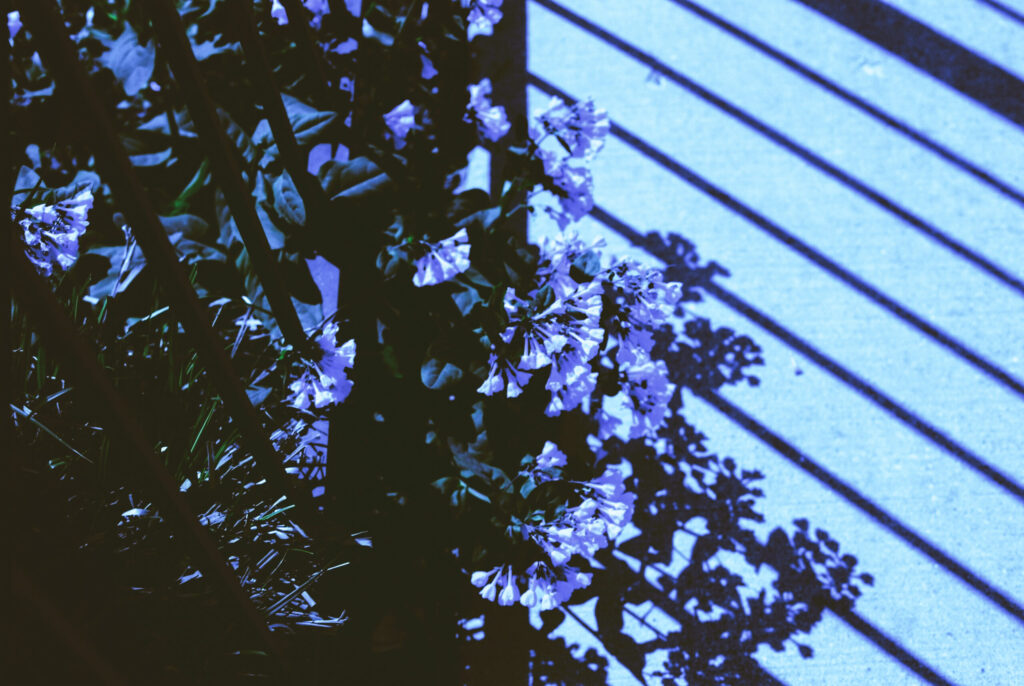
The high contrast actually worked to my advantage here, deepening the shadows and strengthening the composition.
Overall, I think these city shots are more suited to this film than the nature shots were. Clean lines and geometric shapes seem to hold up to Donau’s extremes a lot better than the fine wisps of organic lines foliage gives you.
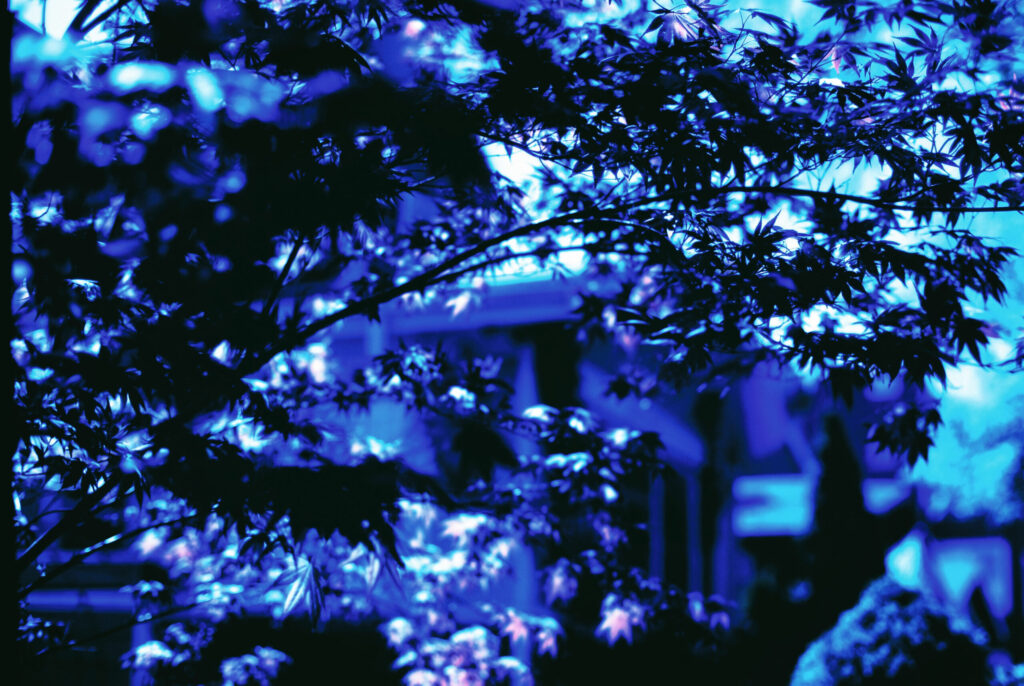
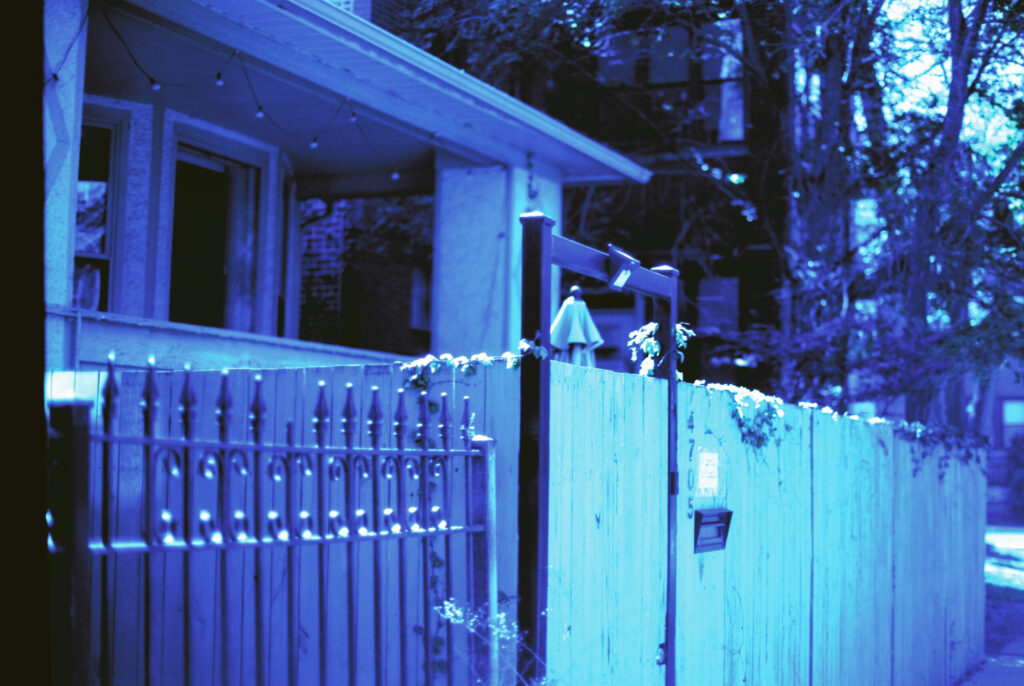
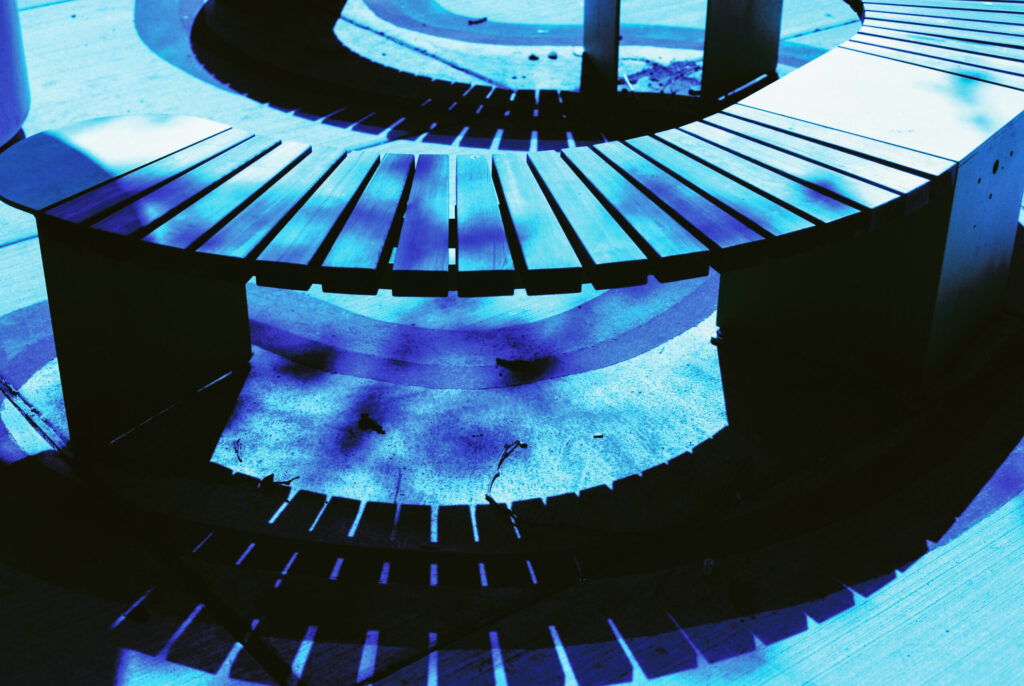
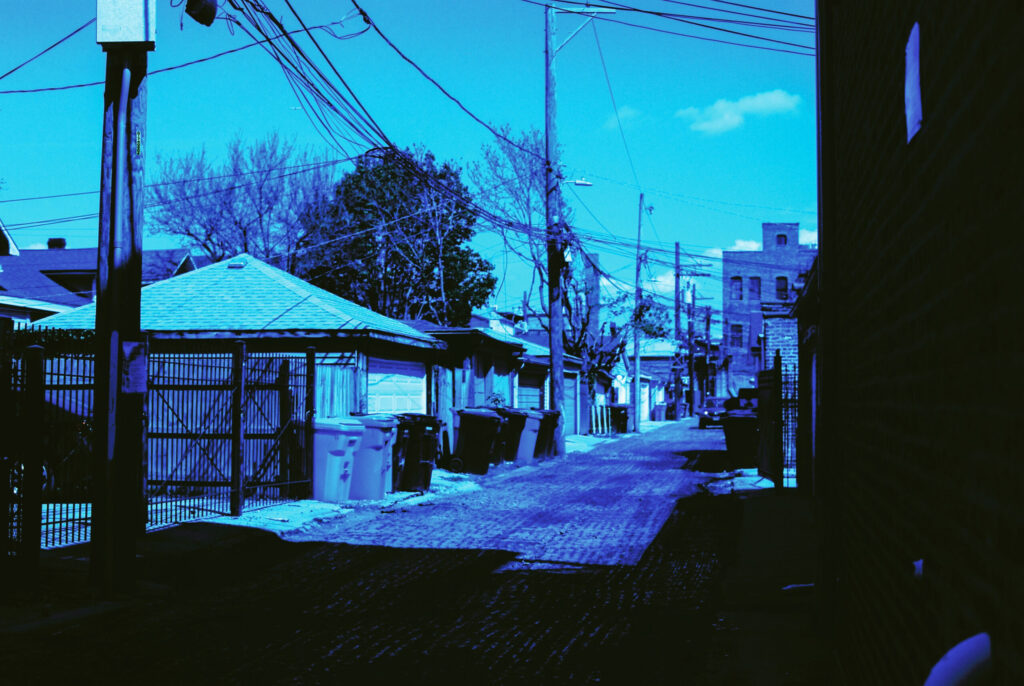
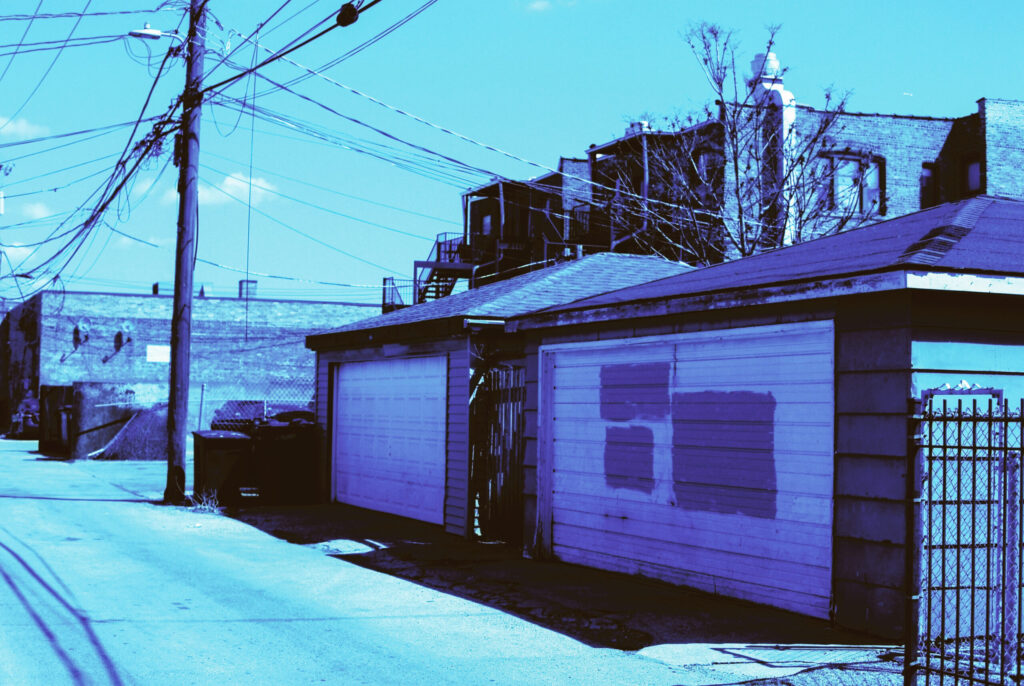
I grabbed a couple more handheld (1/45 sec) shots at golden hour. Golden hour is more like turquoise hour on this film, but it still glows quite nicely.
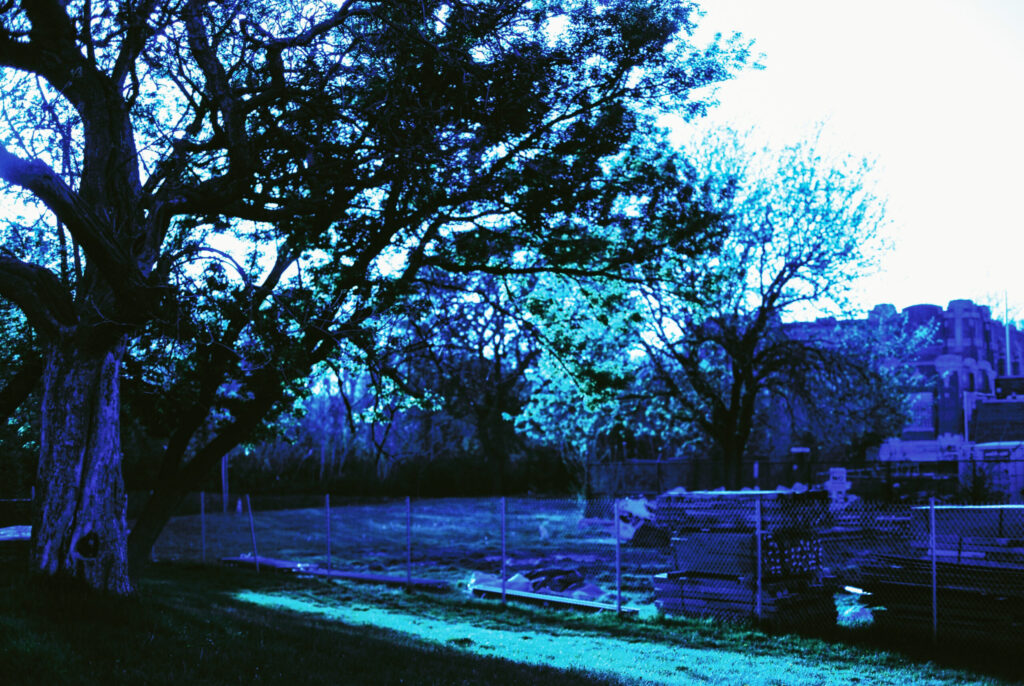
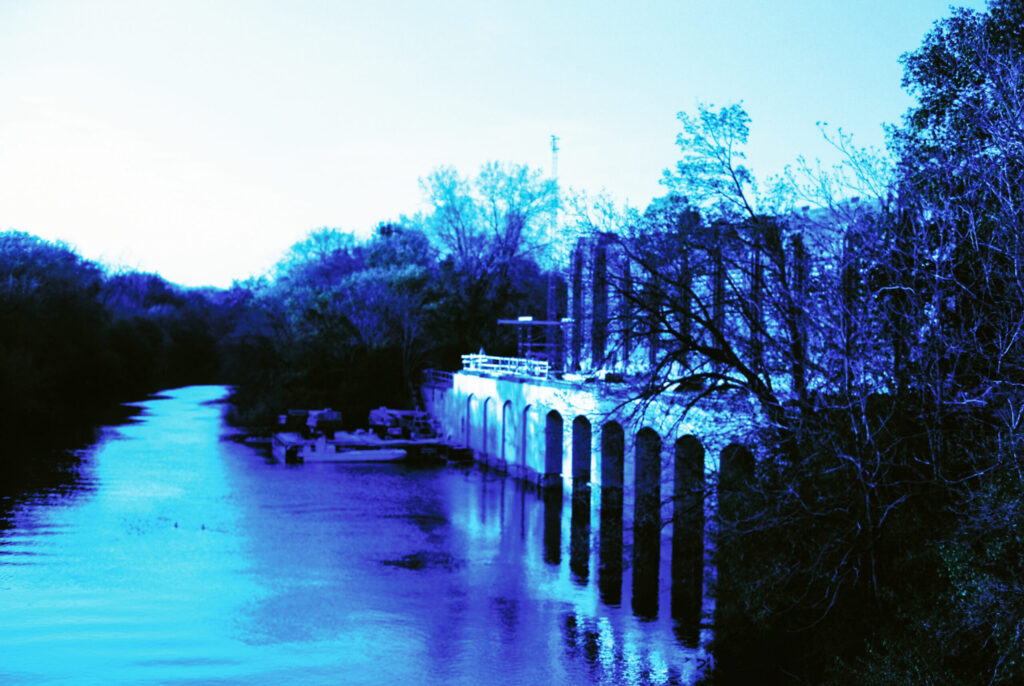
I wish I could say I ended the roll on that relatively high note, but I actually finished it off with some disastrous night photography.
I waited fifteen minutes only to realize my exposure hadn’t taken because I forgot to turn off autofocus. I lost four frames somehow- still figuring that one out. And the two photos I did manage to get were underexposed and/or out of focus.
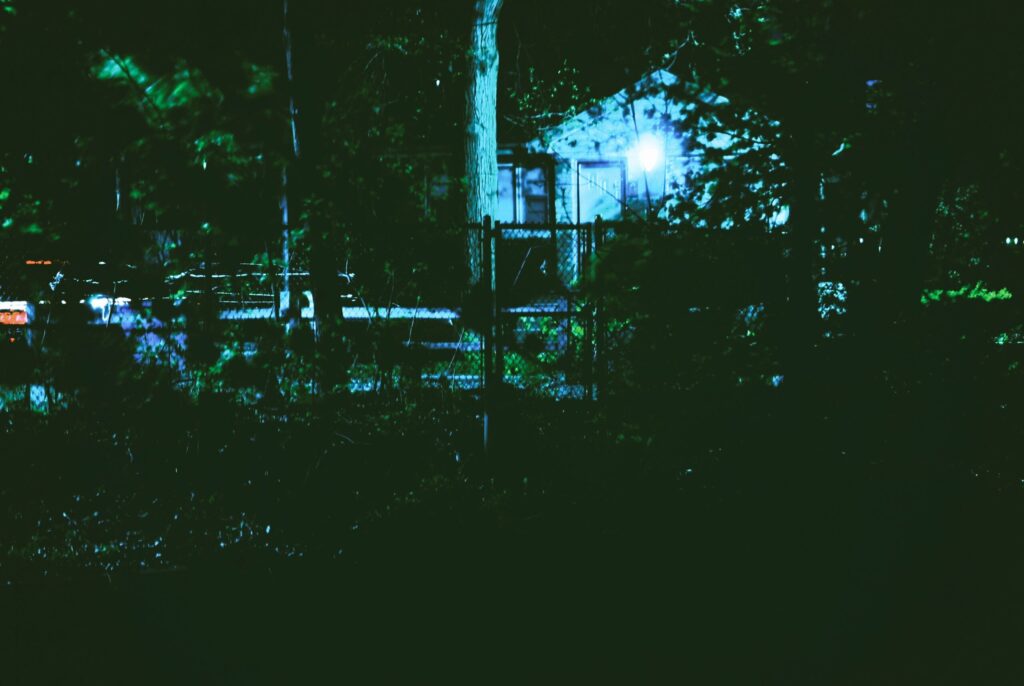
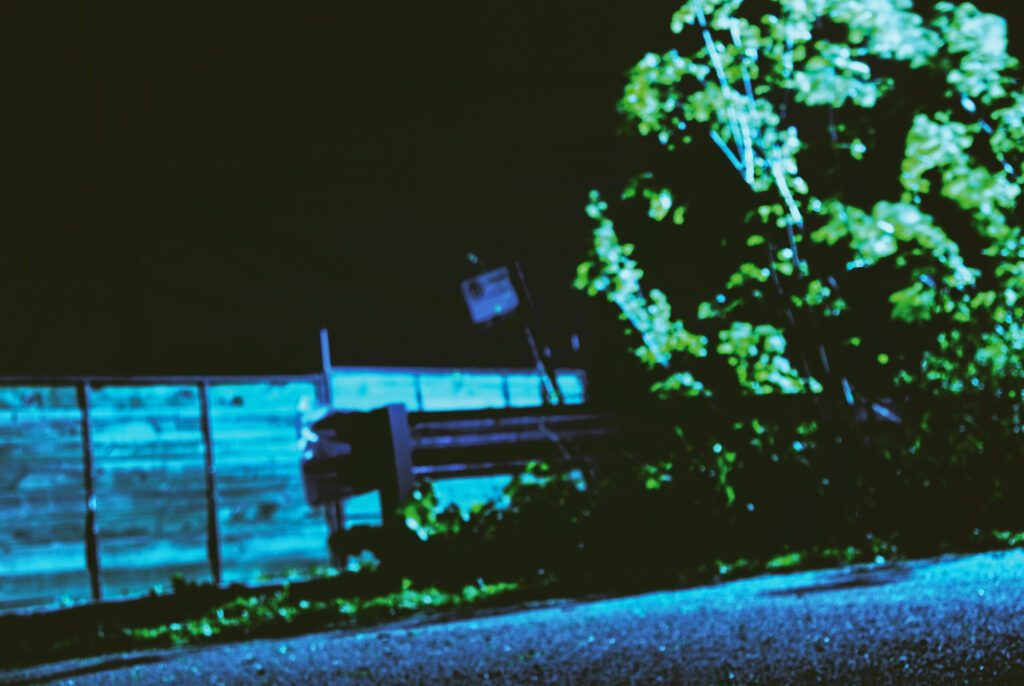
Better luck next time! I’m still convinced this film could be really cool for night photography. Maybe I’ll get it right on my next roll. This film isn’t cheap (in the $17-18.50 range for the most part), so the cost combined with its limitations means it’ll never be anyone’s go-to. But it was a ton of fun to shoot and even more fun to see the results. I can’t wait to repeat the experience- armed with a little more foresight this time.

Related Posts
Pushing Street Savvy 400: I Told You So

Shooting Harman Phoenix From Both Sides with a Lens Splitter

One Comment