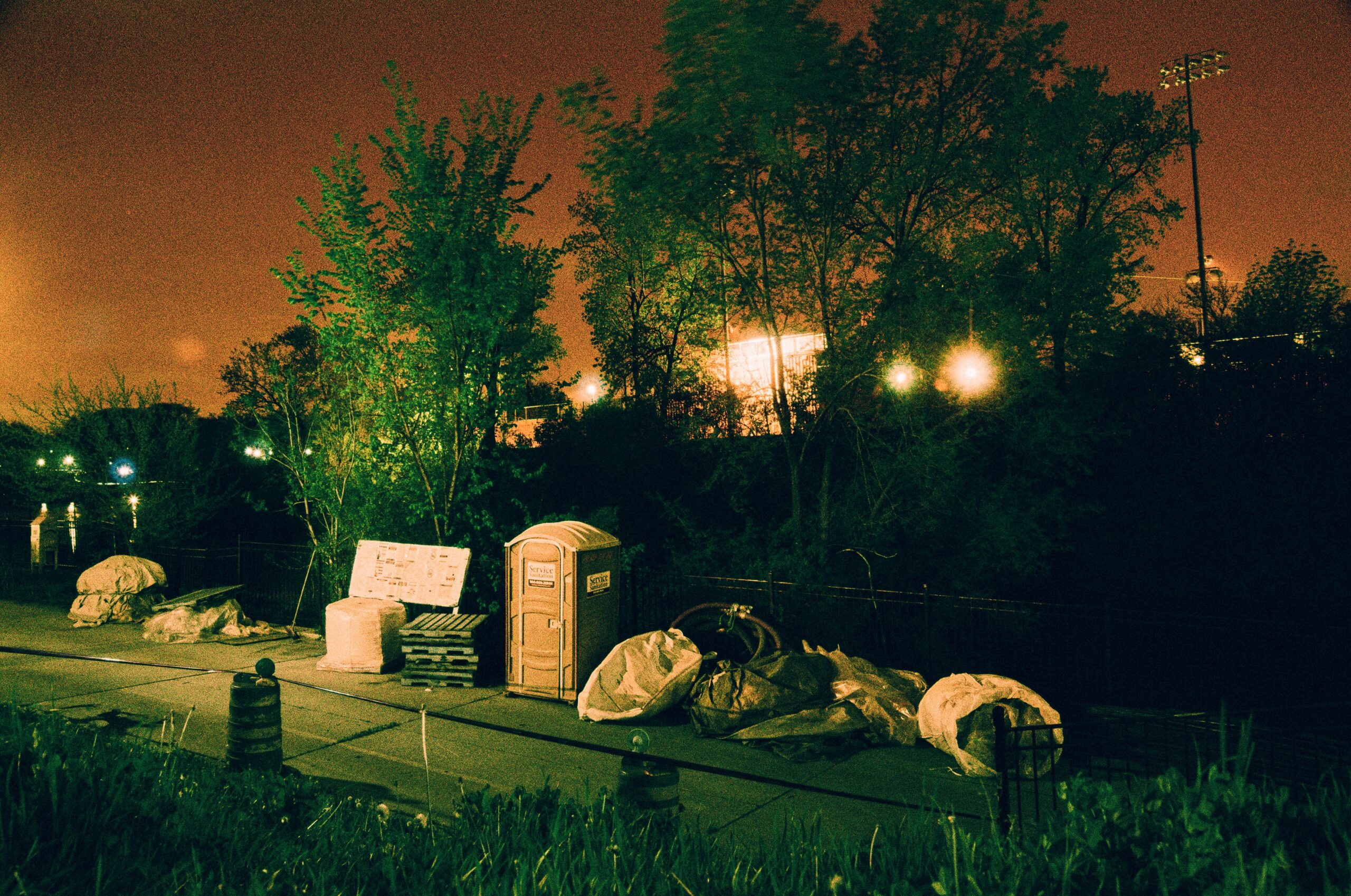
I posted not too long ago about my first, rather messy, attempts at night photography. Since then, I’m happy to say I’ve become…still not all that good at it. But I occasionally get a good shot or two in.
I’m still figuring out how I like to meter my night photography, but I’ve been getting some practice in. I enjoy it enough that whenever I try a new roll of film, I save at least a few frames for seeing how it performs at night. In fact, every shot in this post is from my first roll of its respective film stock.
I’ve posted before about these shots on FPP Low ISO Color and KONO! Donau II, so I won’t belabor the mixed-success-at-best that I had here. I definitely want to try these stocks at night again, though; I think there’s potential there.
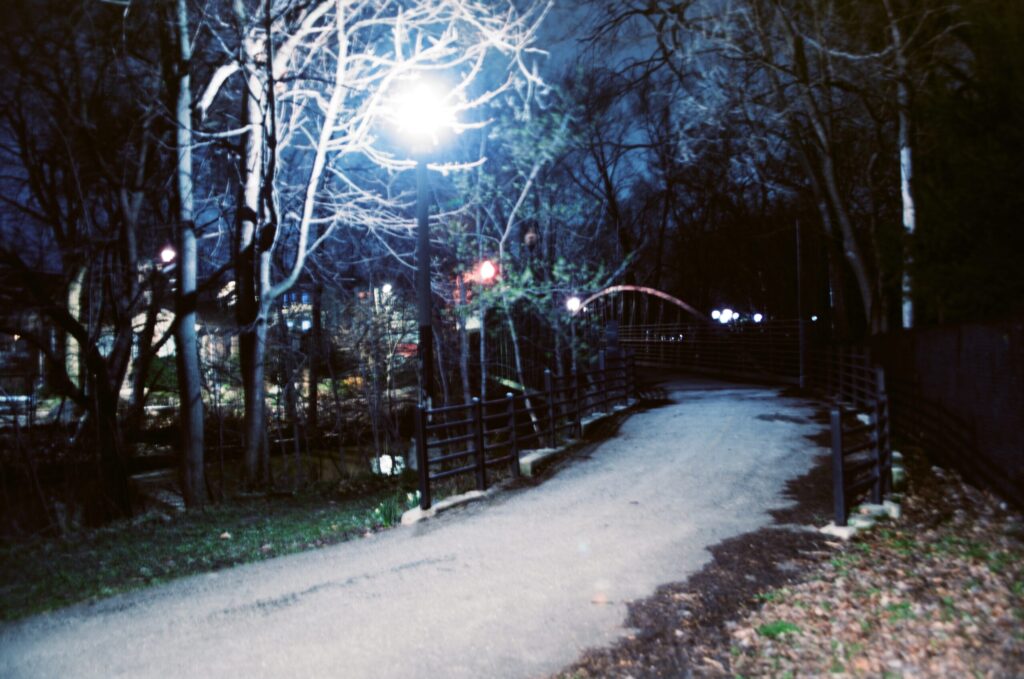
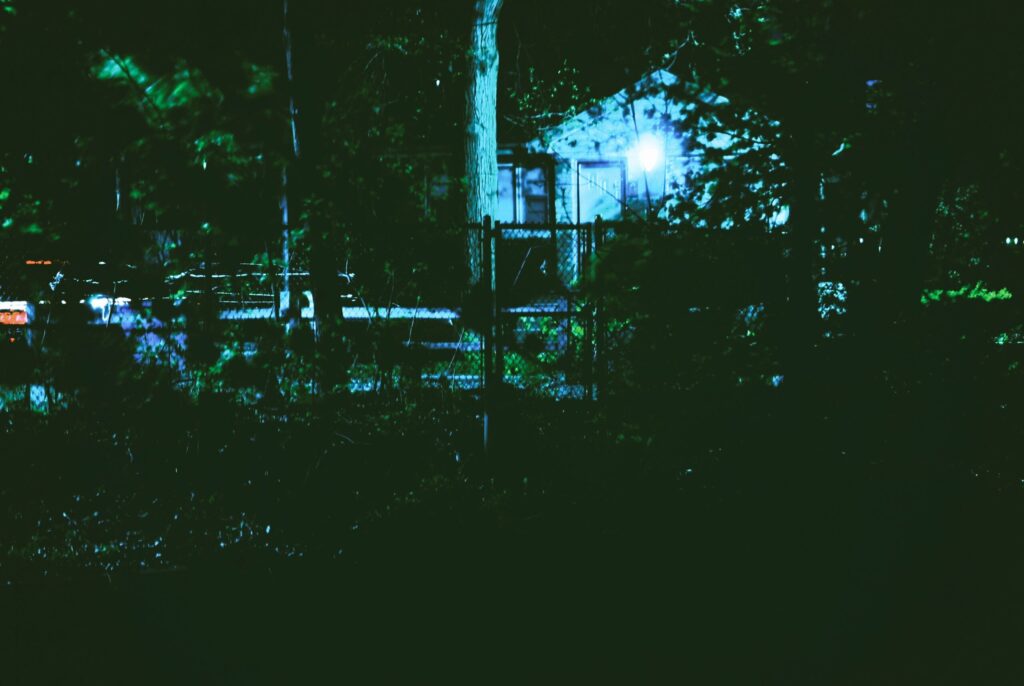
When I shot my first roll of Harman Switch Azure in April, I dedicated about a quarter of the roll to blue hour (orange hour! I’m a sucker for color-shifting films).
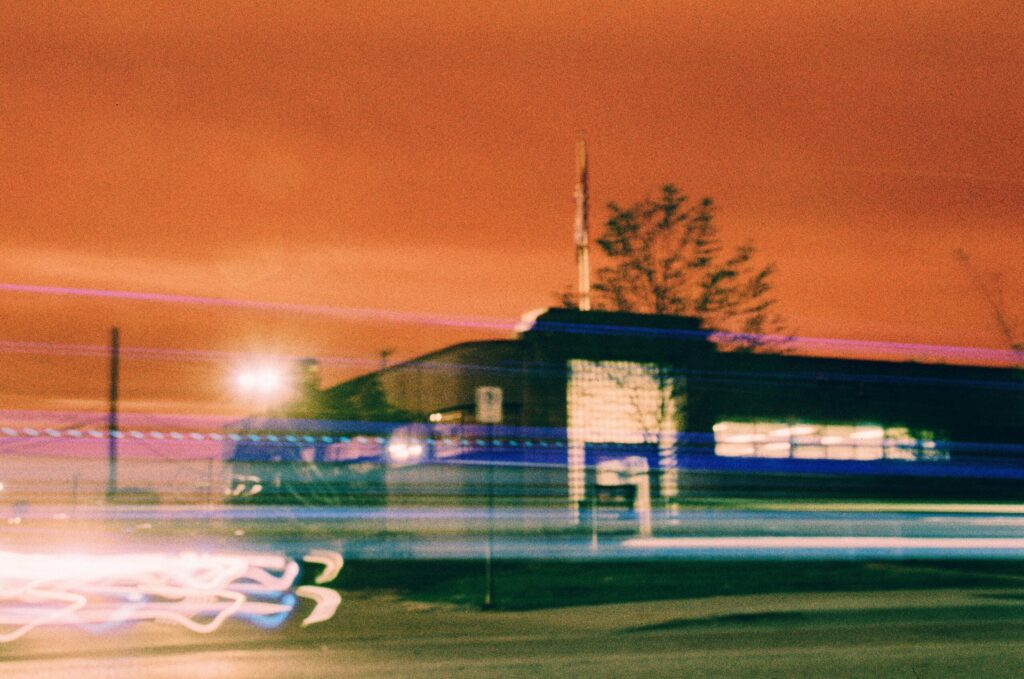
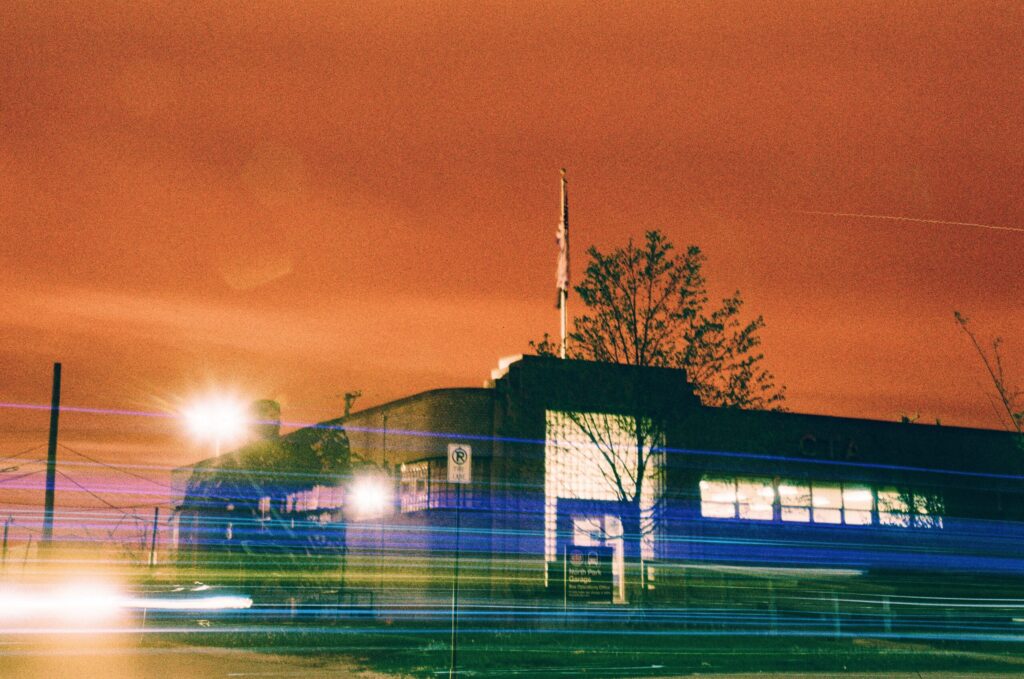
Unfortunately, my purchase of an extremely cheap tripod started to complicate things. On the left shot, my tripod started slipping down during the 40-second exposure. I then reshot it holding the tripod in place, because I wanted that shot, damnit. It paid off- the right photo is just sharp enough that I think I got away with it. I love how the trails from the car taillights turned blue. The road turned a similar enough orange to the sky that the building looks like it’s floating in an orange void.
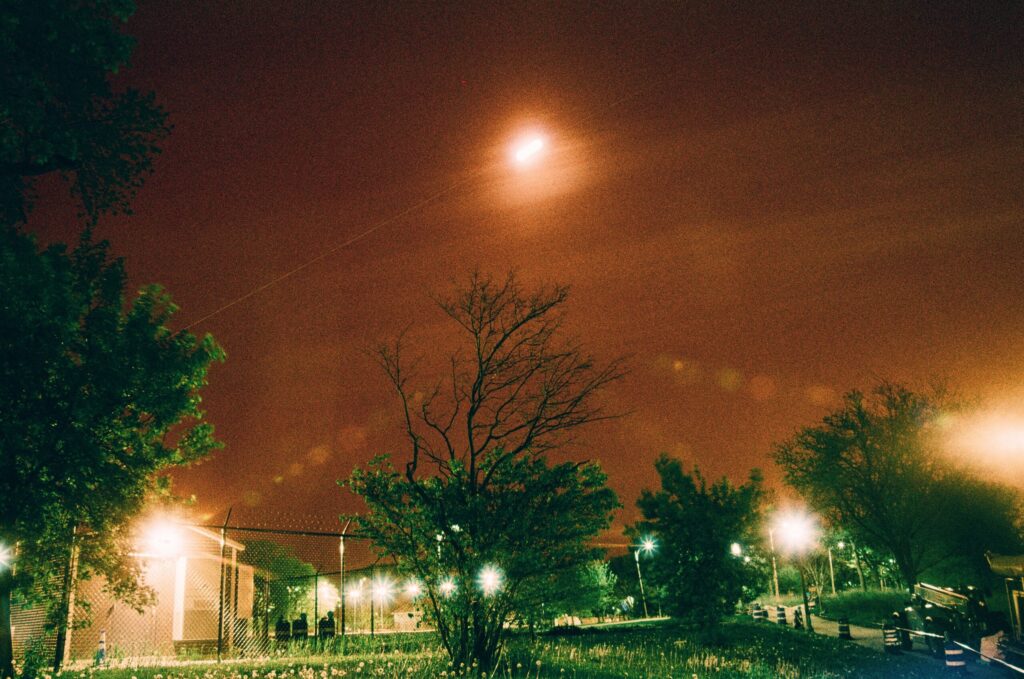
Not the greatest composition in the world, but I love that I got a little moon trail. This was a 6 minute exposure, and I didn’t realize how much the moon moves in that short of a time. I’m not sure what causes that wispy line extending from the moon (maybe the same narrow aperture that causes the star-burst lights?). This was taken from a low angle because, you guessed it, I didn’t feel like holding up my tripod.
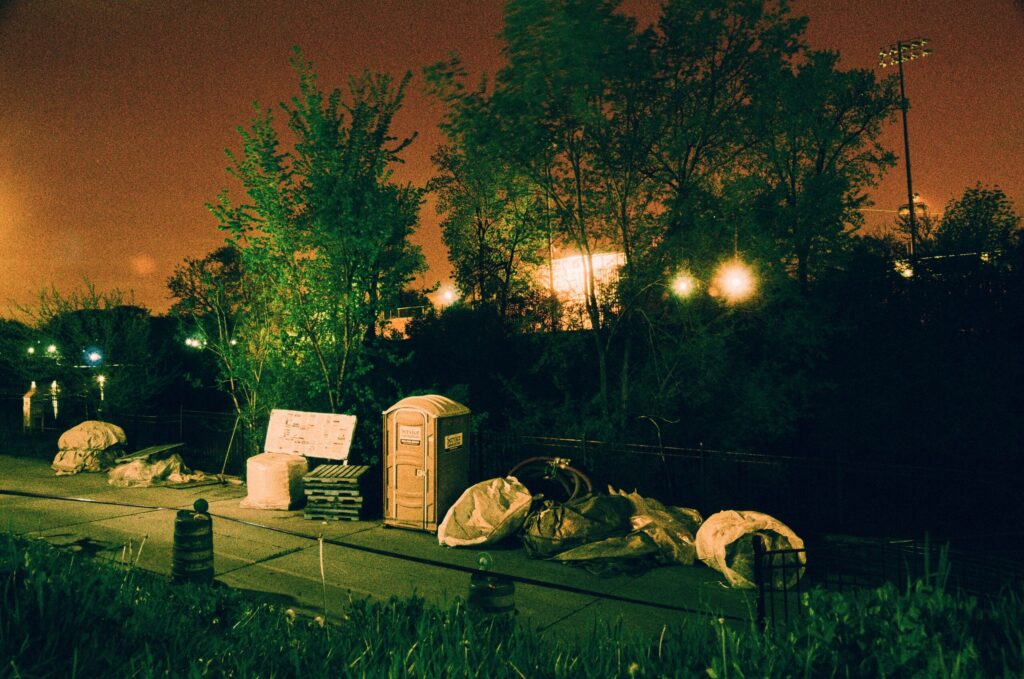
I did figure out how to get a bit more height out of my tripod (by extending it all the way first, and then pushing in the thinnest parts of it), but I do love a low angle. This was 2.5min at f/11. I love the contrast here from the harsh artificial lighting. The multicolored halation is nice, too.
I’ll spare you the absolute dogshit moon photo I took, and a couple shots that would’ve been cool if they’d actually been in focus, and end with this somewhat mid but overall successful one:
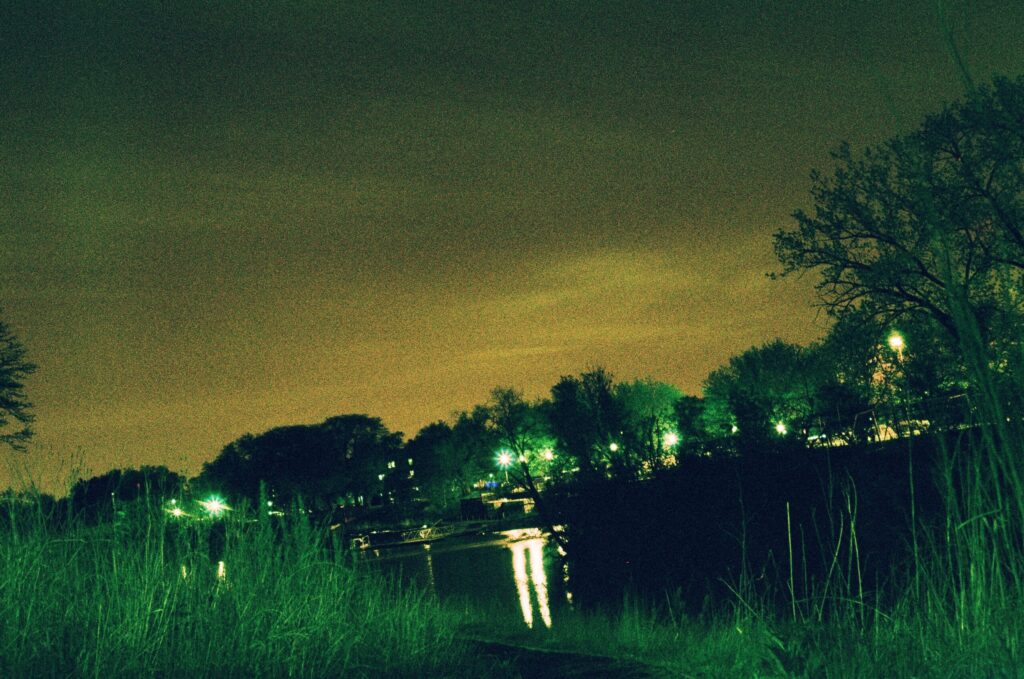
This was 6min at f/16. You can tell it was getting darker out from the reduced orange in the sky. I really do like this stock for night photography. The skies became very grainy, but that’s to be expected with a Phoenix-based film. I wonder how it’d look on a less-cloudy night.
Next up is another color-shifting stock, the unmistakable Lomochrome Purple!
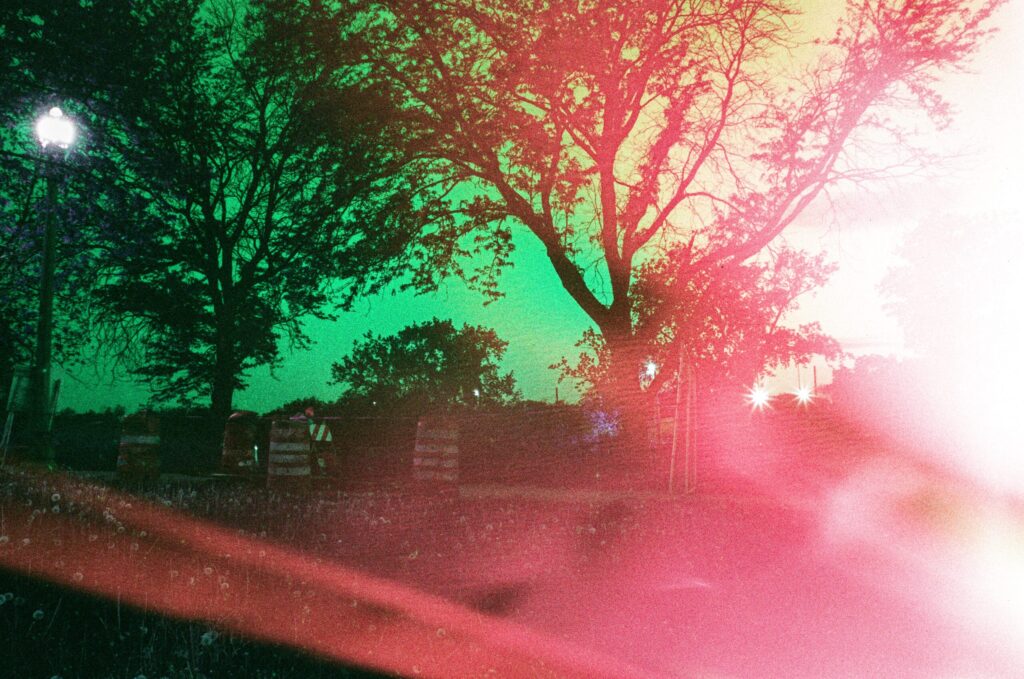
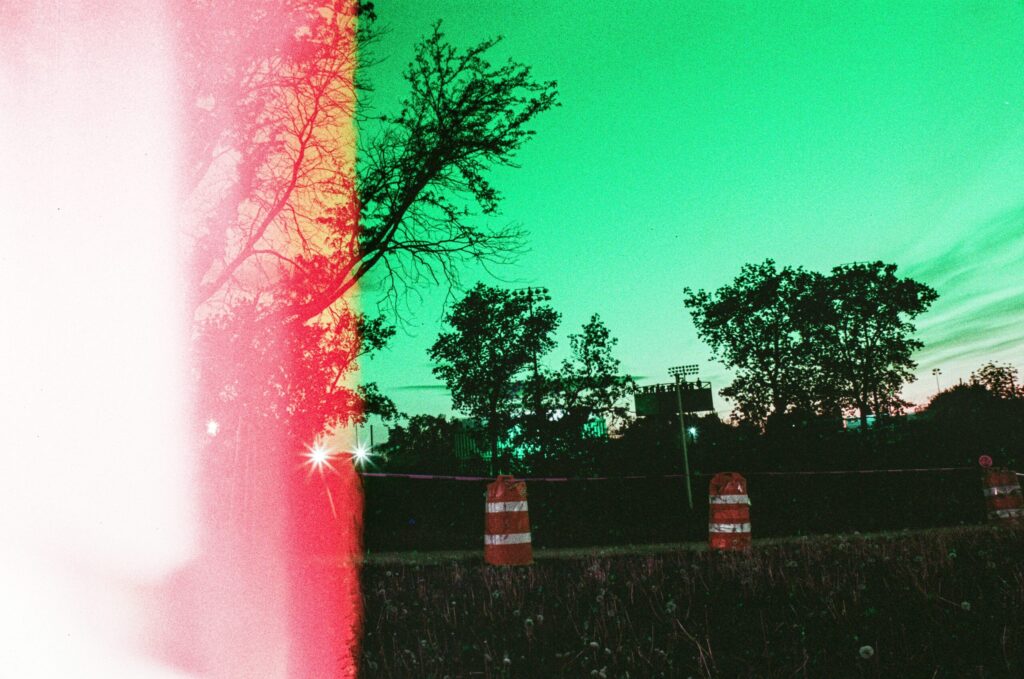
These two were badly light leaked (what else is new), but I do love how the light leaks turn from orange to magenta with this film. The pale green sky is lovely, too.
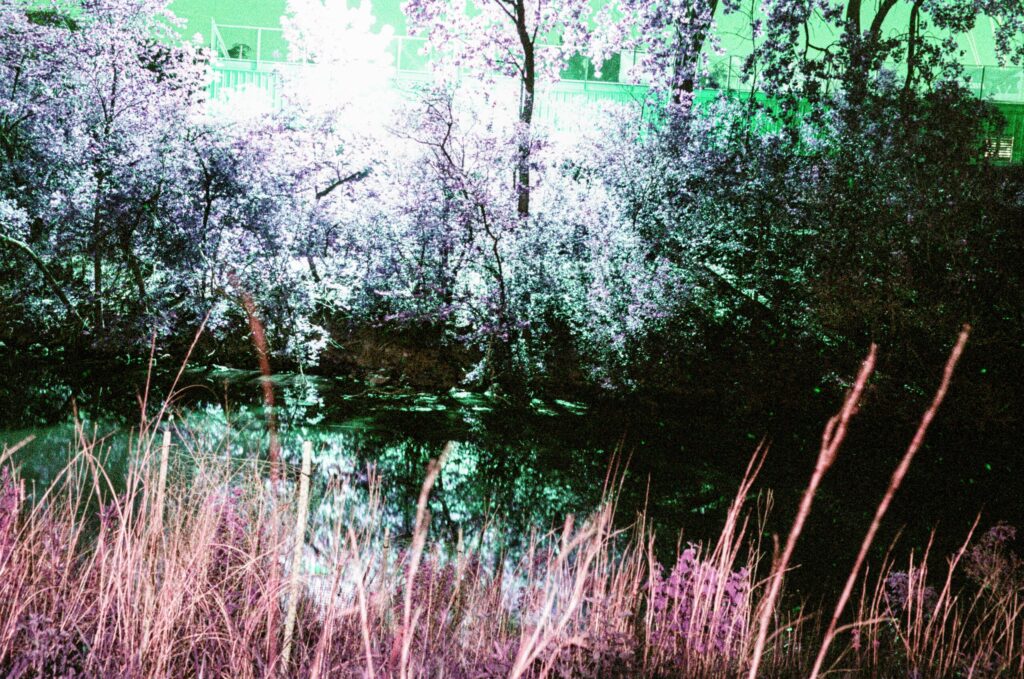
I blew the highlights to smithereens here. No getting around that. I guess that’ll happen when you point your lens at a bright outdoor light for a quarter of an hour. I was hoping to see more of the reflections on the water (which were a warm green in real life), but the color shifts are still nice here. You get the whole range of cool colors- magenta grass, blue reflections, purple trees, and green sky.
Immediately after I finished the Purple, I loaded some FPP Derev Pan 400. Actually, I’d snuck in one frame of it earlier that night during blue hour:
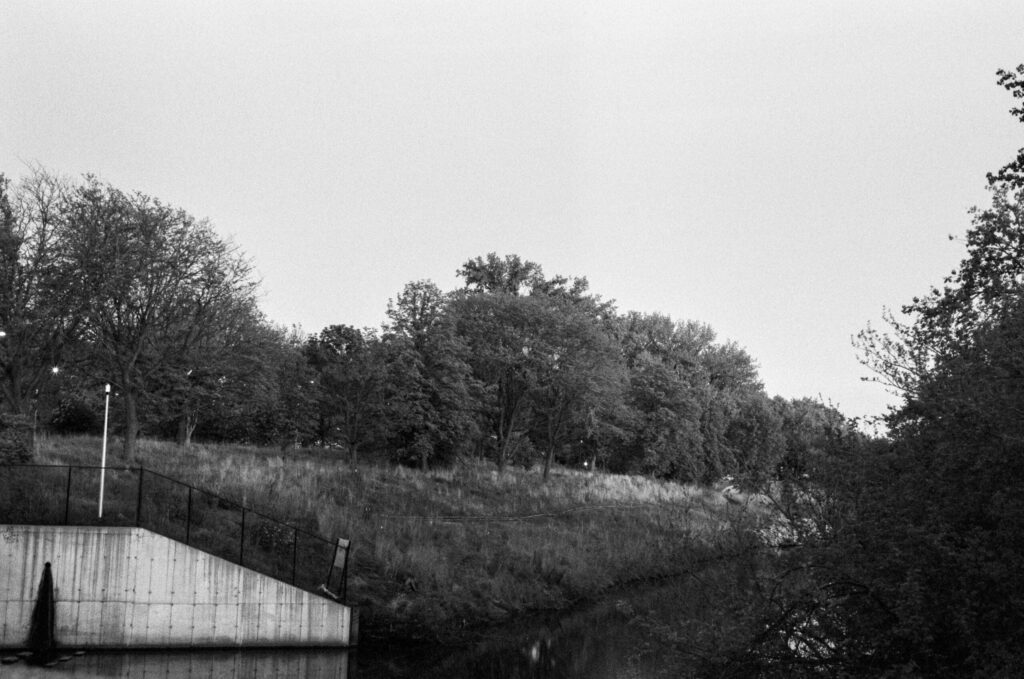
By the time I finished the Purple, it was distinctly night time. I decided I’d had enough of tripod-ing and would instead experiment with some multiple exposures. This didn’t go very well.
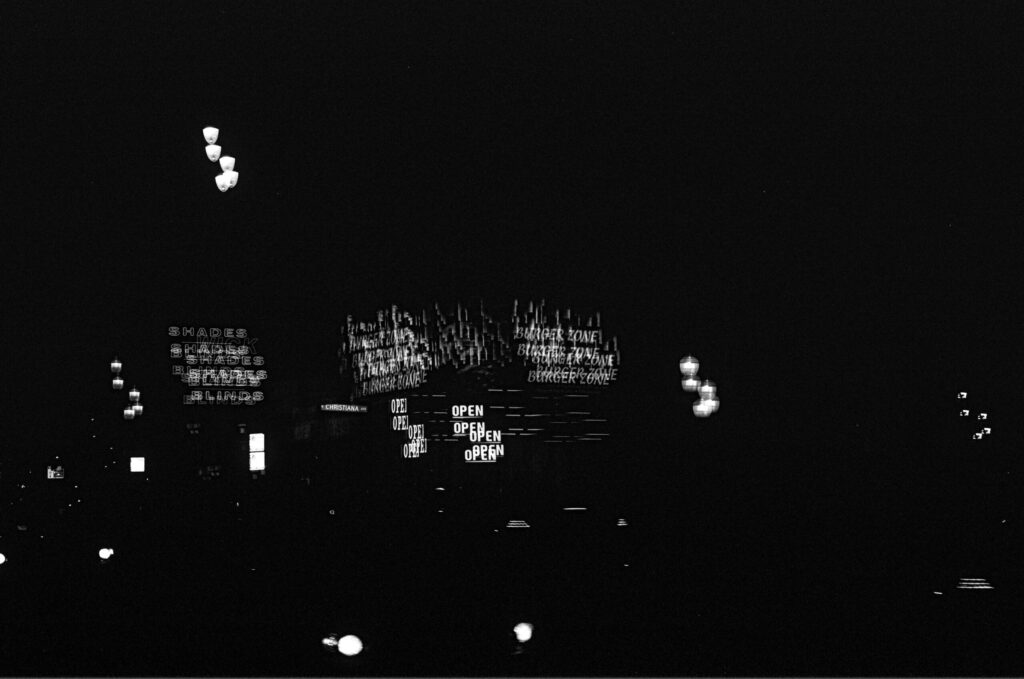
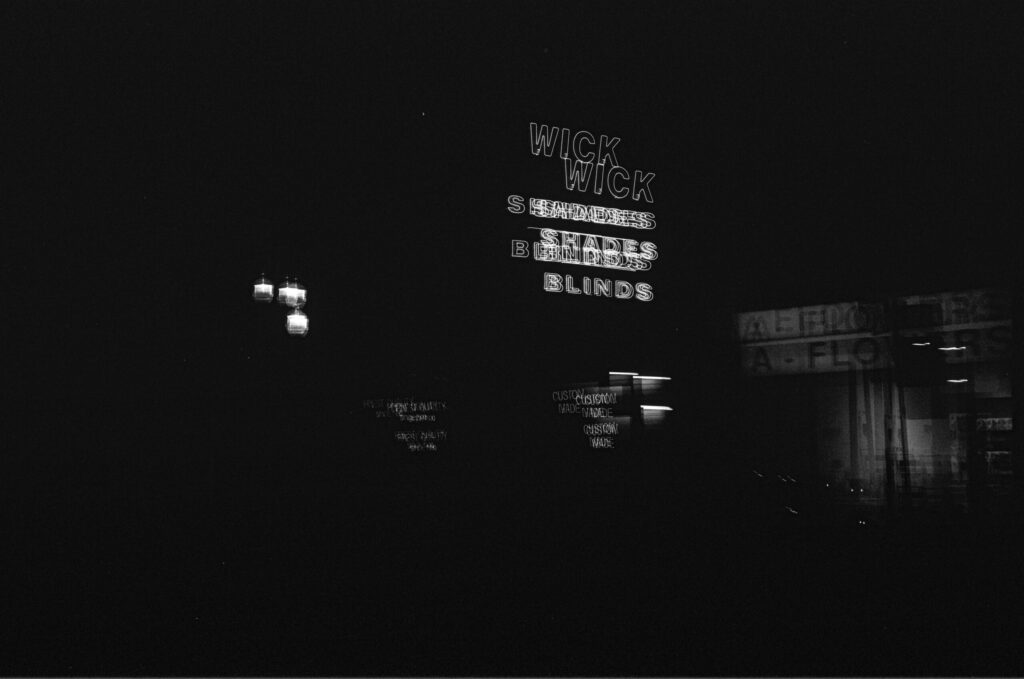
These were each 5 exposures of a busy city street- 1/180 f/8.0, and 1/125 f/9.5. I tried to calculate them at 5 stops underexposed, but I think I was counting on the car headlights to do too much of the heavy lifting for me. A smarter idea would’ve been to make one of those exposures a slow shutter speed, and get some nice light trails from the cars. Hopefully I will remember to try that sometime.
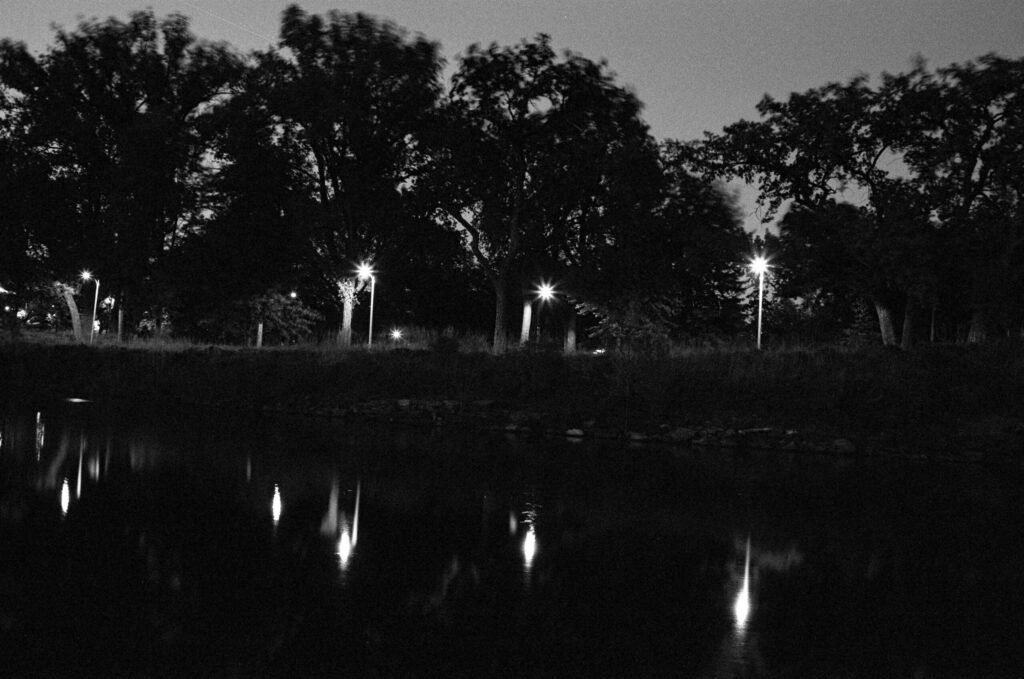
This one’s decent. Ninety seconds at f/16. F/16 seems to be the cutoff for getting those star-burst lights I like so much.
At some point in the night, I hit the wrong button and ended up rewinding, then shooting through to what frame I thought I’d been on. I guess I counted wrong, because I do not remember intentionally double exposing these frames:
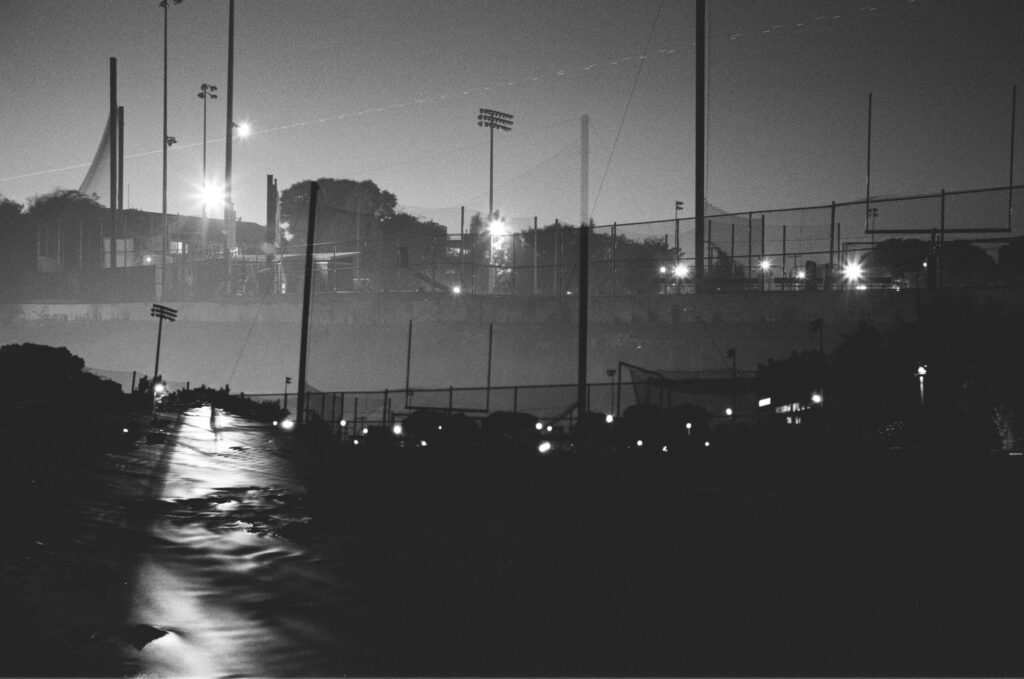
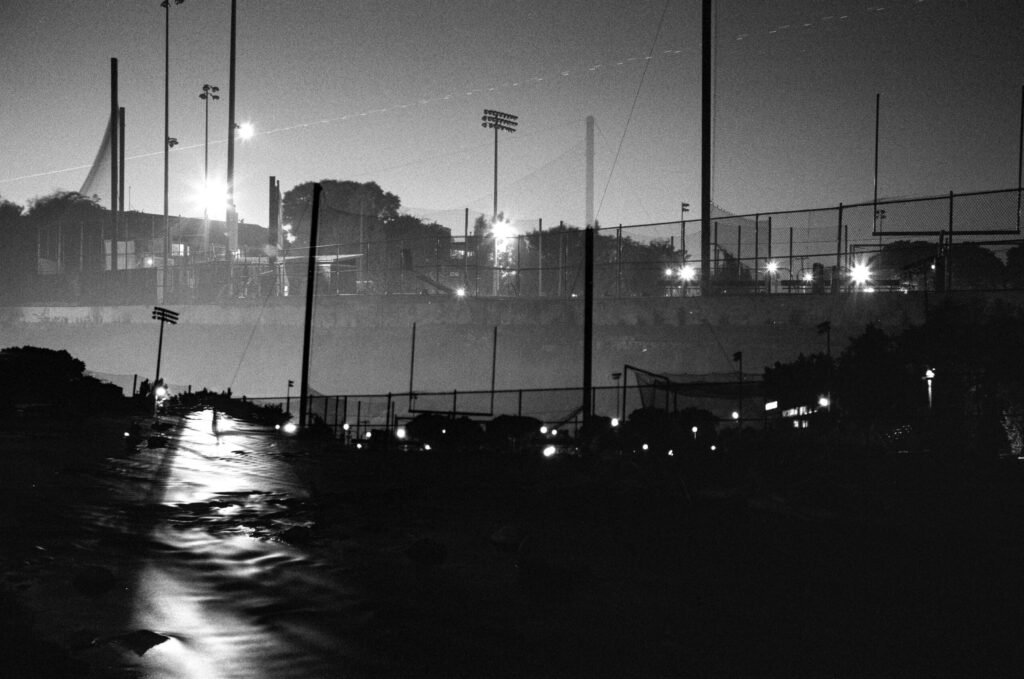
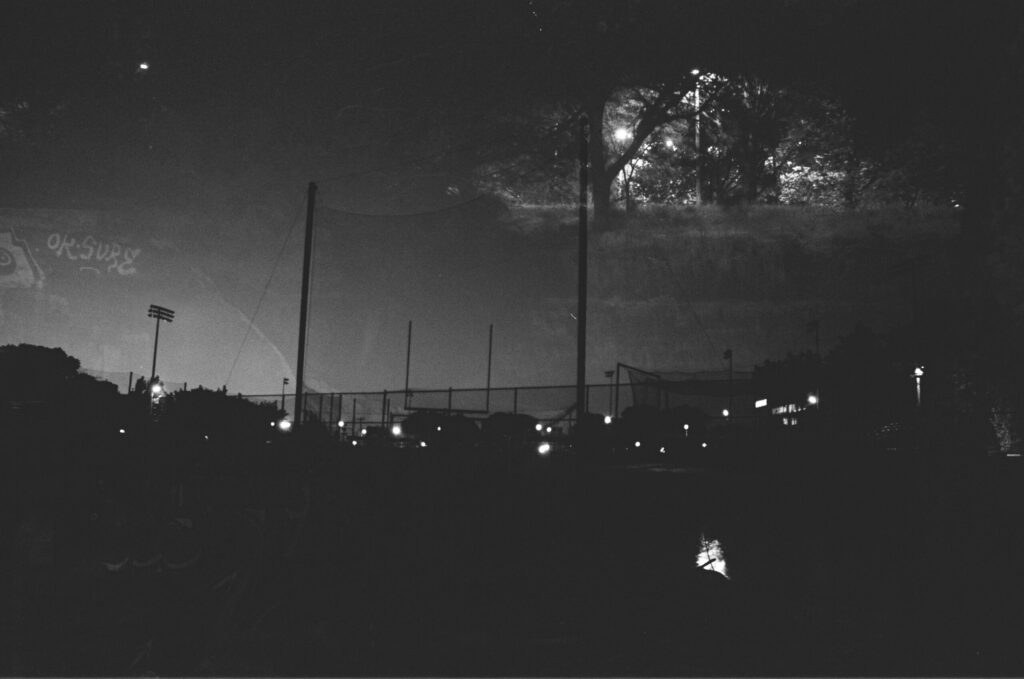
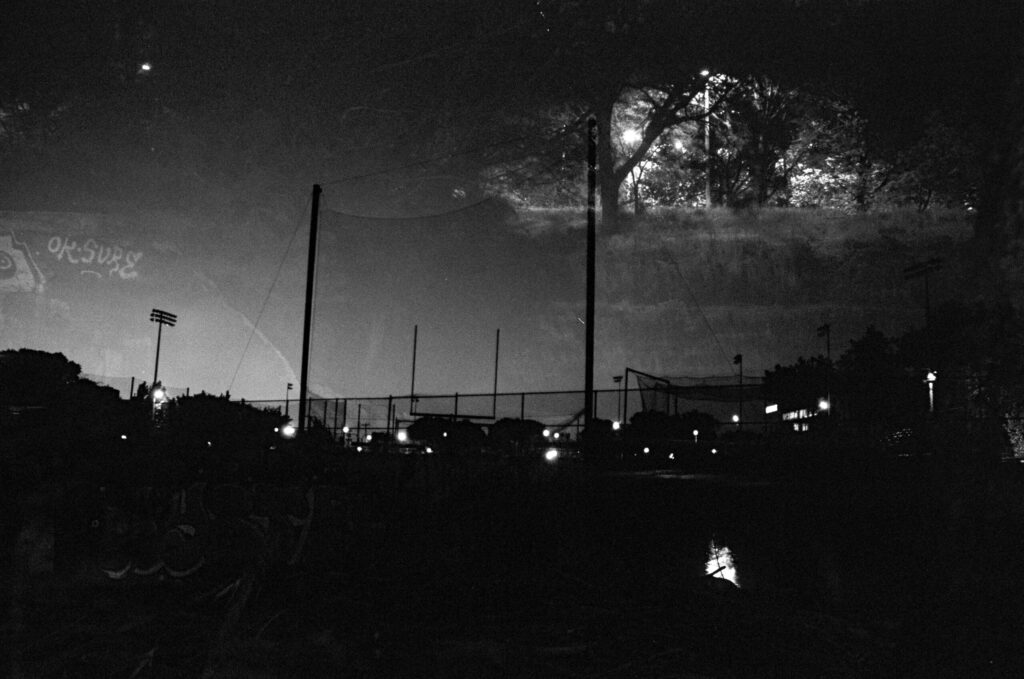
I’ve shown the unedited versions on the left because I was actually impressed with how much detail I was able to recover in post, even after setting my black point to darken the shadows. The Derev Pan films are originally aerial surveillance films, so it makes sense that they’d capture a lot of detail.
I also just started using Darktable to edit. It’s intimidating, but definitely powerful, especially given its (lack of) price. Batch editing has been a game change for me, too. (Don’t ask what my editing workflow was before; you don’t want to know.)
The Film Photography Project also sells 100- and 200-speed versions of Derev Pan. I will definitely be trying those out sometime.
Lastly, I’ll leave you with a single shot from a roll of Vision 3 320T I shot. This roll had the worst light leaks I’ve ever seen, and this is me talking. Some of those leaks were probably my fault for loading it in daylight, but I’m not taking the blame for all 30 lost frames of this roll. I don’t have much to show from this roll at all, but funnily enough, this shot from the one of the few clear frames might just be my favorite night photo I’ve ever taken:
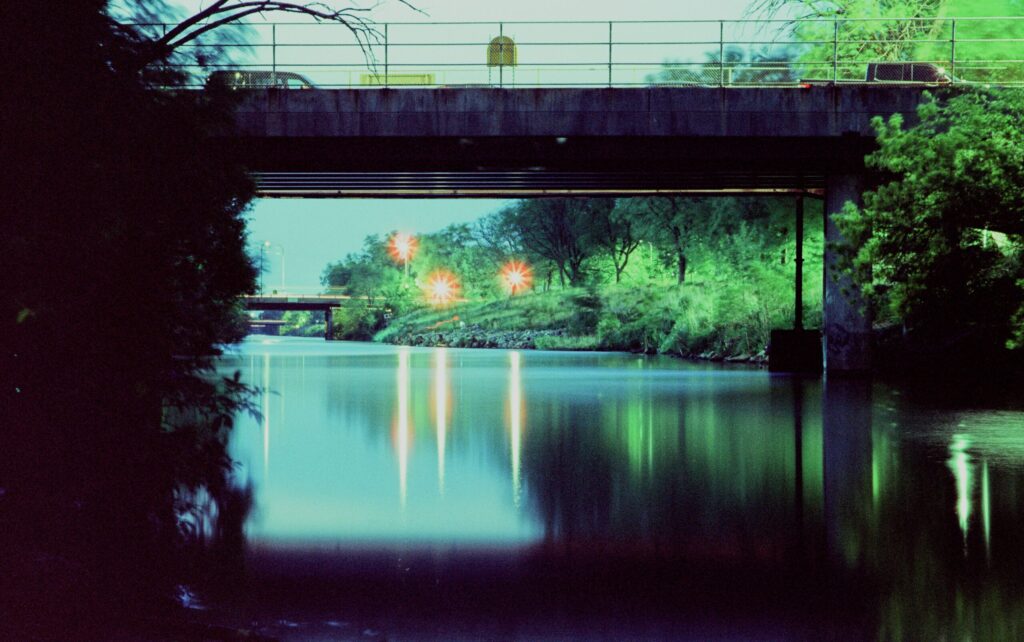
This was 18min at f/22, and well worth the wait. I remember every second I spent leaning uncomfortably against a tree jutting out of the riverside waiting for this shot- I even remember the exact chapter of the exact fanfic I was reading on my phone during this exposure.
Night photography is complicated, slow, and challenging, but magical when it goes right. Then again, the same thing could be said for film photography in general- we don’t do this because it’s quick and easy!

Related Posts
Pushing Street Savvy 400: I Told You So

Shooting Harman Phoenix From Both Sides with a Lens Splitter
