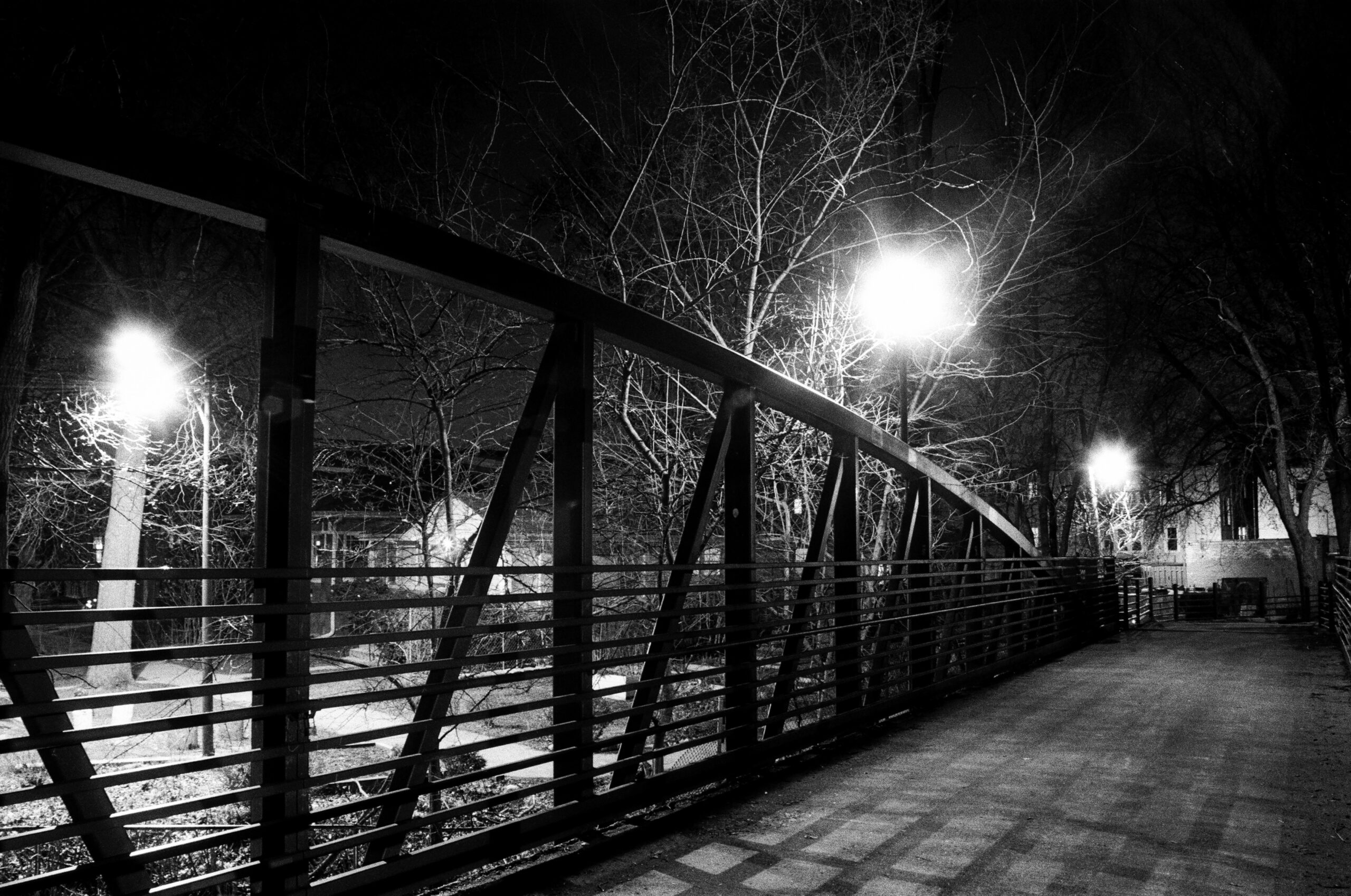
What prompted me to dip my toes into night photography actually had nothing to do with night photography, and a lot to do with my cautious interest in low-ISO films- I’m talking single-digit ISO. But I knew the series of steps between my newbie self and the future me who might just stand a snowball’s chance of taking decent low-ISO film photos would involve me getting a tripod.
So here’s my first foray into night photography, some of which was actually just golden hour photography that happened to involve a tripod.
These were all shot on my Elan 7, using the 28-105mm f/3.5-4.5 EF lens.
Night 1
Step 1: Buy the world’s cheapest tripod
Step 2: Forget your shutter release cable
The evening was off to a great start. I was shooting Dealer’s V3 50D on a windy Chicago evening where my tripod would’ve stood no chance even if I’d had my shutter cable.
The Dealer’s V3 line is all repackaged Vision 3 AHU cinema film, as you might expect from the name. This meant at least I could use a reciprocity calculator for Cinestill 50D, since they’re (basically) the same film stock.
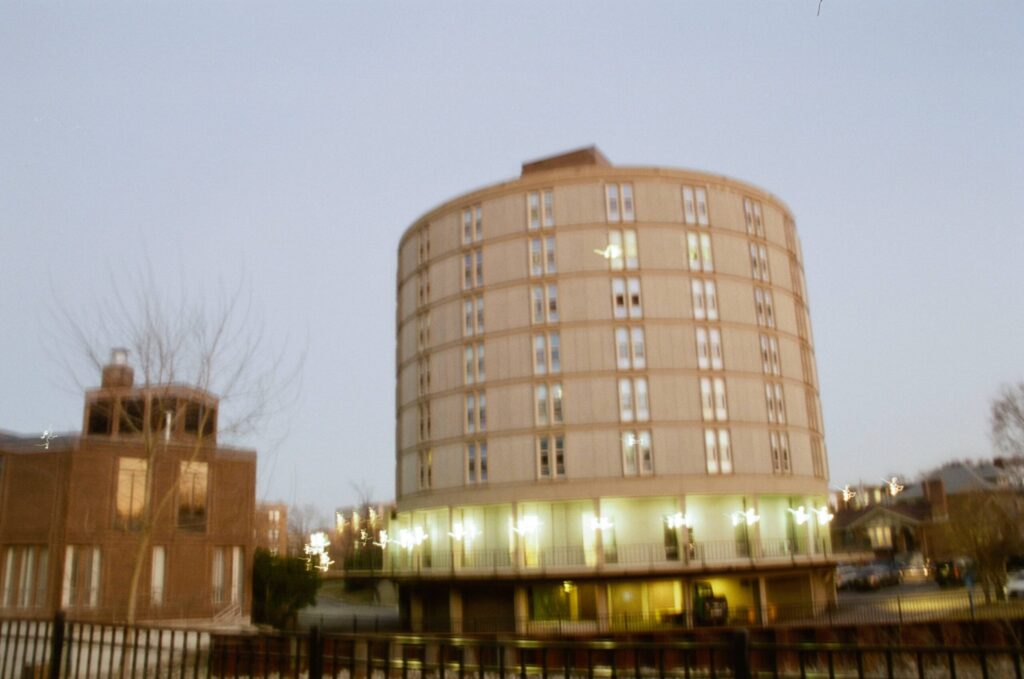
This is f/8 at 15 seconds. Fifteen seconds of watching my poor tripod get buffeted by the best the Windy City had to offer, and it shows. At least I exposed it decently.
I quickly decided to give up on the tripod and try a couple funky handheld things just to make the best of the situation.
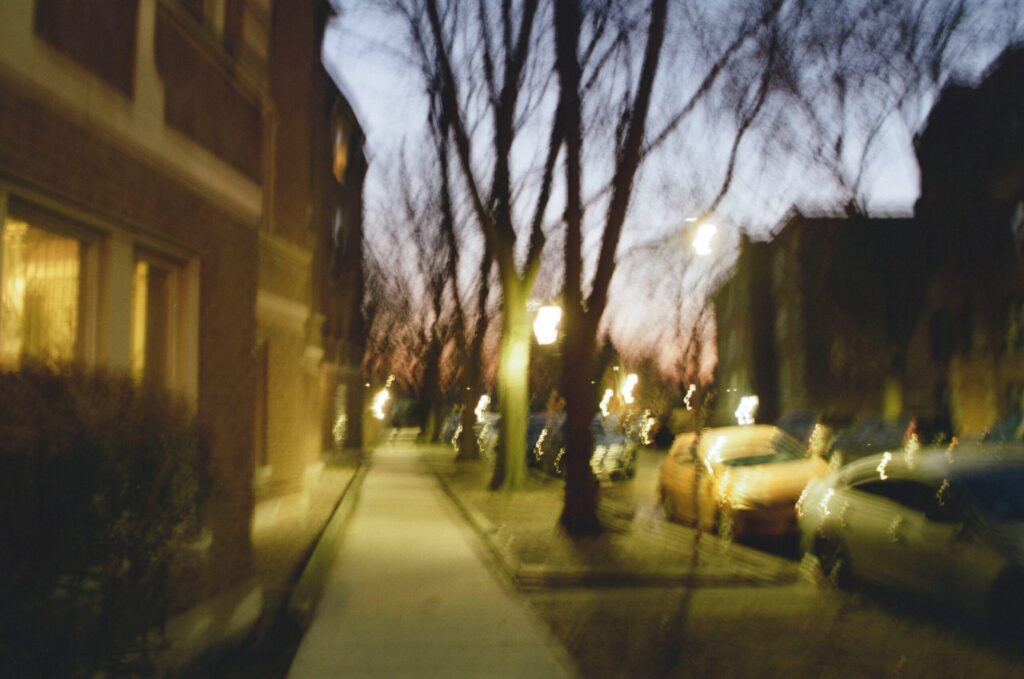
This was a double exposure at f/8. One exposure was at 1/60, and the second was at ten seconds. I think if I think if I played around with this technique I could get something that looks more intentional, rather than just looking like I dropped my camera.
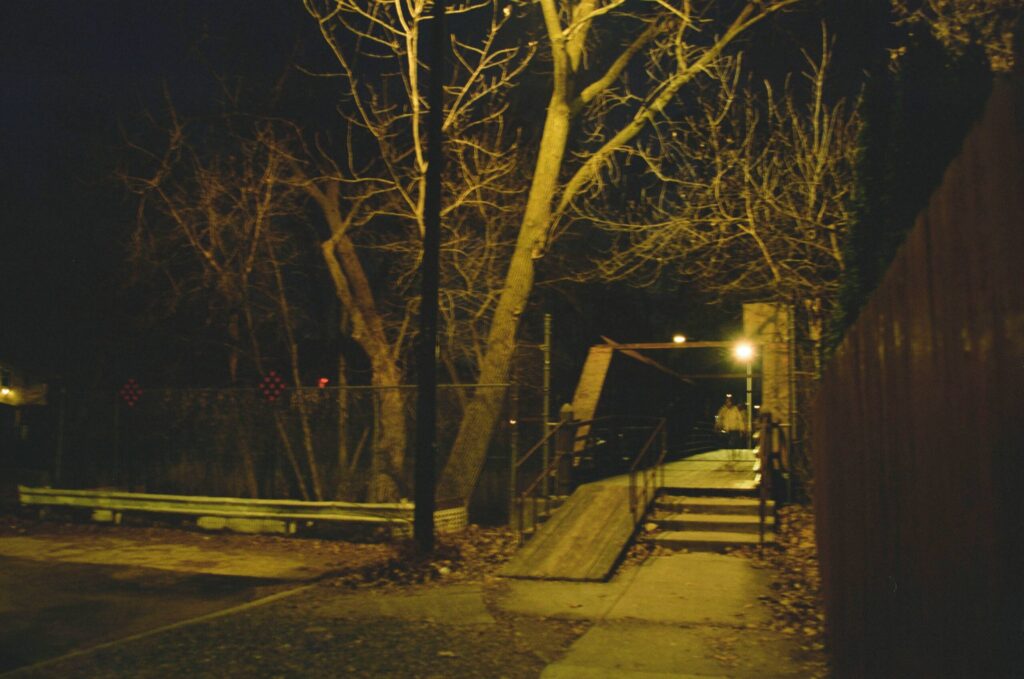
This actually kind of worked! I metered for how long a shutter speed I’d need for this scene, and then divided it by five. This wound up being five 1/8 second exposures at f/5.6. It’s still blurry, but I’m surprised how well it came out. I think if I had used an actual handholdable shutter speed, we’d really be onto something here. My only limit at that point would be the nine exposures that the Elan can go up to.
Night 2
Ten nights later, I was ready to redeem myself. The pieces were all in place: Tripod. Shutter release cable. Aesthetically appealing bridge. And a few frames left on my first roll of Kentmere Pan 200.
I couldn’t find any reciprocity information, so I used a reciprocity calculator for KPan 100 instead. I did forget to calculate reciprocity for the first two frames, but I’m not sure that actually mattered.
Disregard the light leaks on these shots, by the way- they’re courtesy of my famously-busted camera back and they were present for a good 50% of the roll.
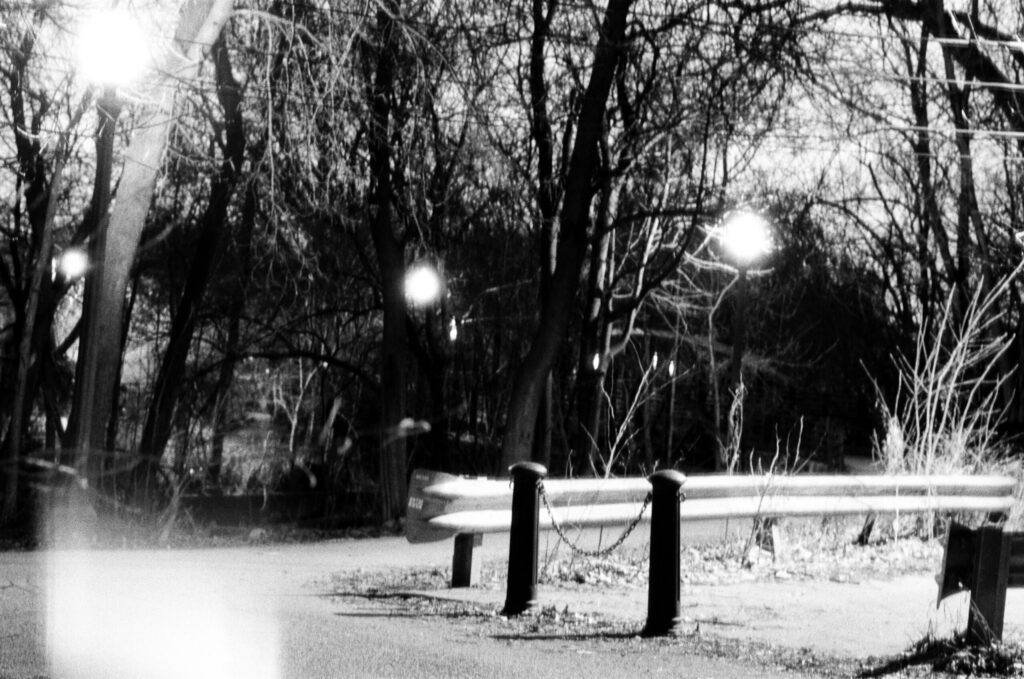
Boy, are those highlights cooked. Part of that is the halation you get with KPan 200. But mostly, it’s what happens when you shoot directly at a bunch of strong outdoor lights. This was 30 seconds at f/9.5.
The remaining frames of the night were taken while standing on a pedestrian bridge. A fun thing I learned about this bridge that night is that it shakes like a nervous chihuahua anytime someone walks, let alone jogs, across it. My neighborhood turned out to have more night exercisers than I could have ever imagined, and I could feel people coming before I could see them. If I were someone who was scared of bridges, it would’ve been a rough time.
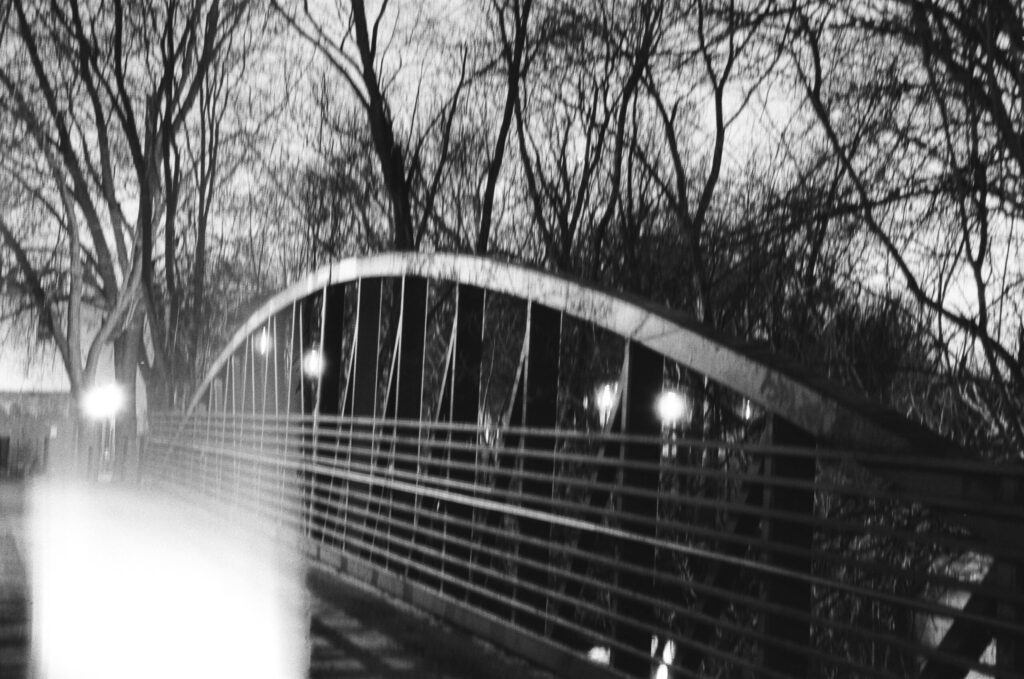
This was 90 seconds at f/16. I’m going to blame the blurriness on the person who walked across the bridge during this shot.
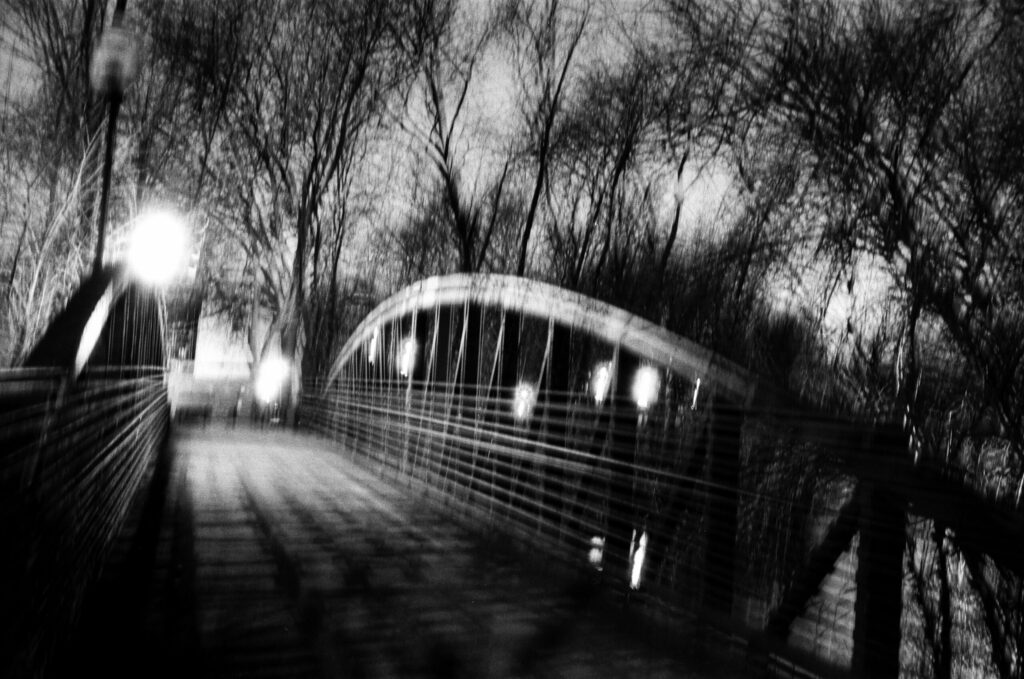
Four and a half minutes at f/16. It will not surprise you to learn that someone jogged across the bridge during this shot. Honestly, the blurriness here looks kind of cool rather than just fuzzy. It reminds me a little of the double exposure frame from the previous roll.
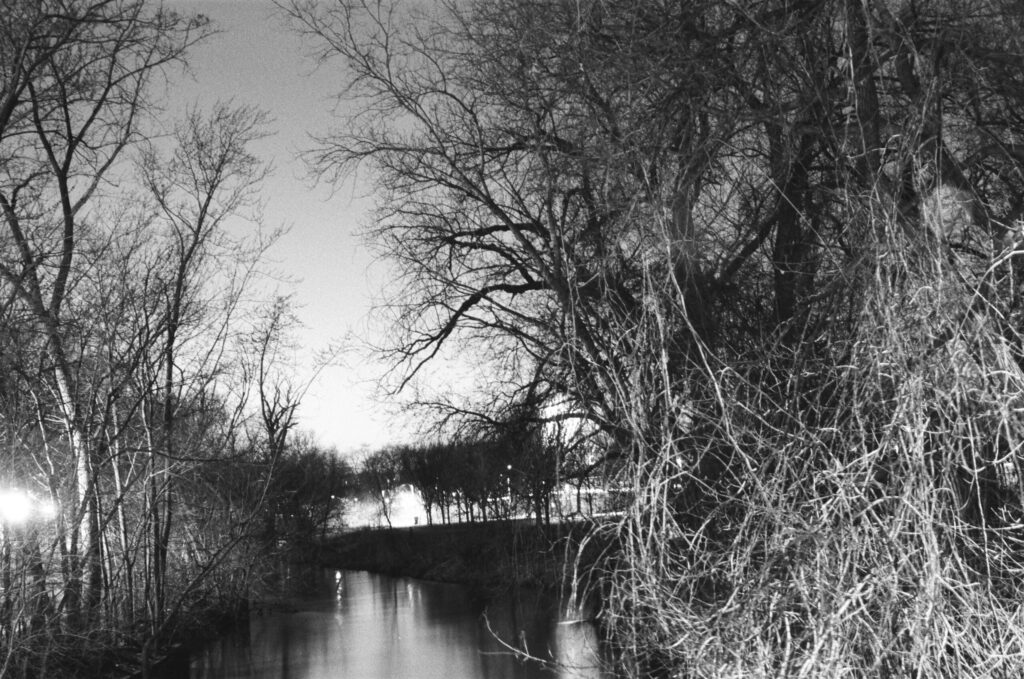
Seven minutes at f/16, and not a single interloper to be found.
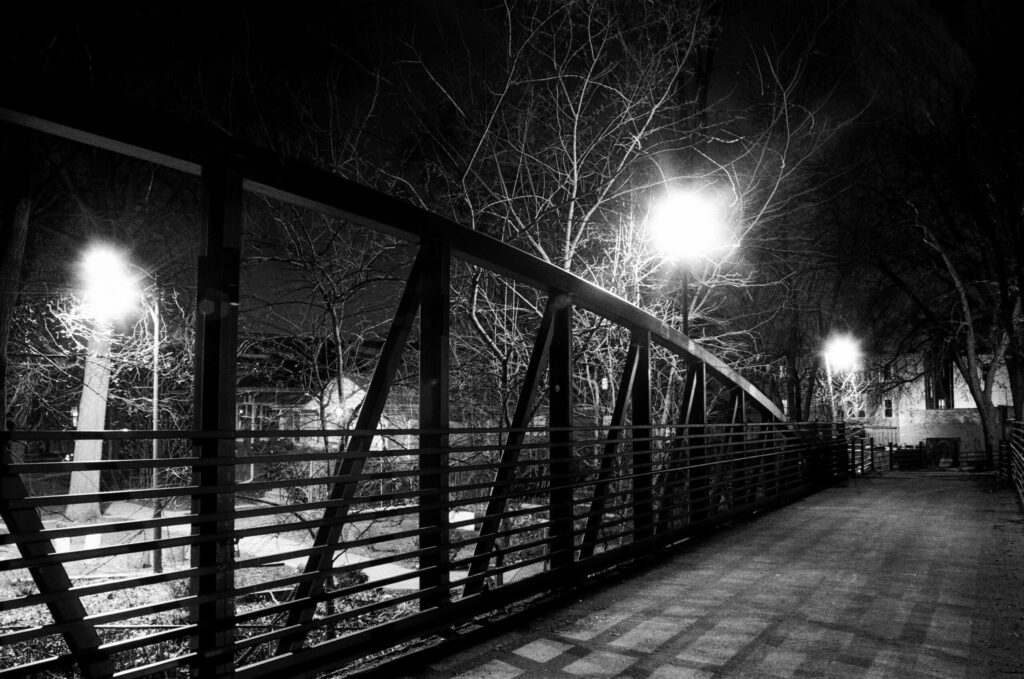
Three minutes at f/16. A person with two dogs walked across, but they all must’ve been light steppers, because this is crisp! I really love this shot. It’s definitely my favorite of the roll.
That was the end of my KPan, so I loaded some Elektra 100 and shot a single frame of it for good measure. Elektra is recommended to load in the dark anyway, so I figured there was no better time and place than an ominous bridge at night. This seemed to be the ticket, because for once I didn’t get any light leaks.
The only reciprocity information I could find on this stock (which is respooled Kodak Aerocolor IV) is that reciprocity kicks in at 1/10 second. For the sake of sticking with the same ISO, I wound up copying the reciprocity for Ektar 100. I was a little worried this would have worse reciprocity, though, as 1/10 second seems a bit on the early side to me. I guess there’s no real reason to have good reciprocity on this kind of film; you’d probably be using fast shutter speeds if you’re shooting it from a plane.
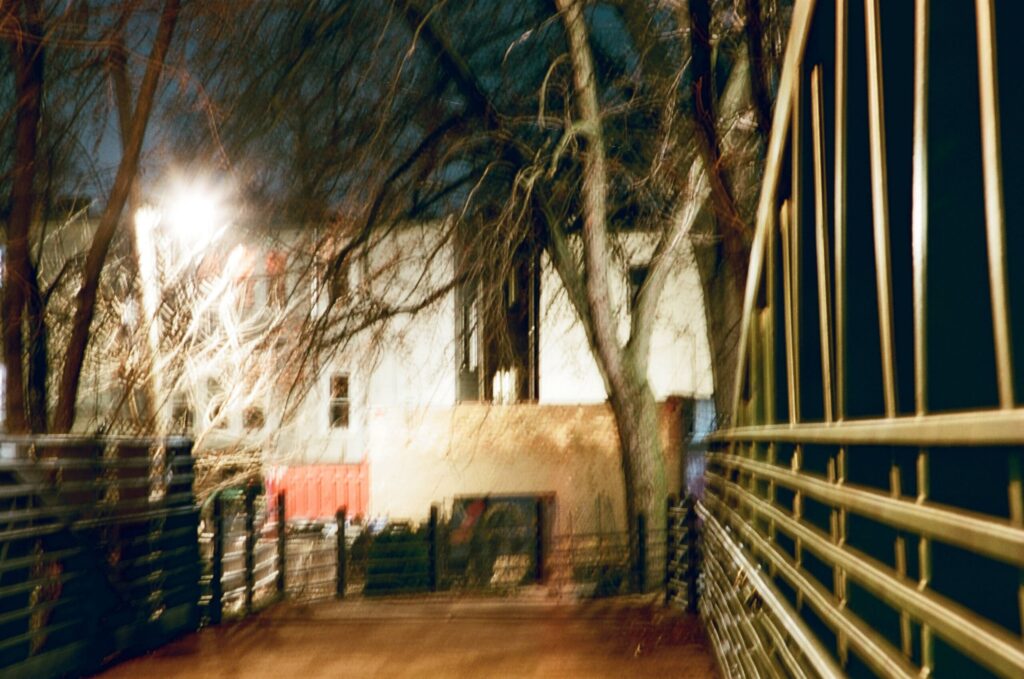
Four and a half minutes at f/19, shaken up by our final jogger of the evening. Don’t let anyone tell you that a little exercise never hurt anyone. Still, I love seeing the increased saturation and contrast that comes from shooting this film at night like this. There’s really something to be said for those harsh outdoor lights.ee
Night 3
A few days later, I decided to take the Elektra 100 and tripod out for a spin again- during golden hour at the local nature reserve, this time, although some of these photos almost look like daylight.
The next three photos were all taken at three seconds at f/16.
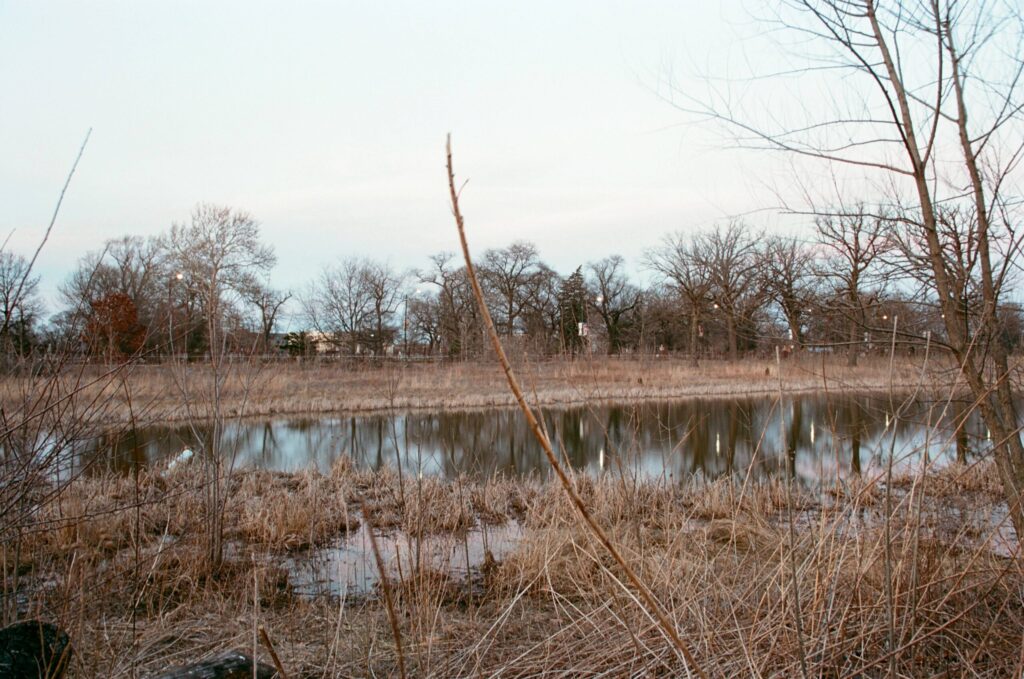
I really enjoy that having a tripod means I can shoot narrower apertures under any lighting conditions. I’m so used to having to shoot wide open as soon as the light starts to go.
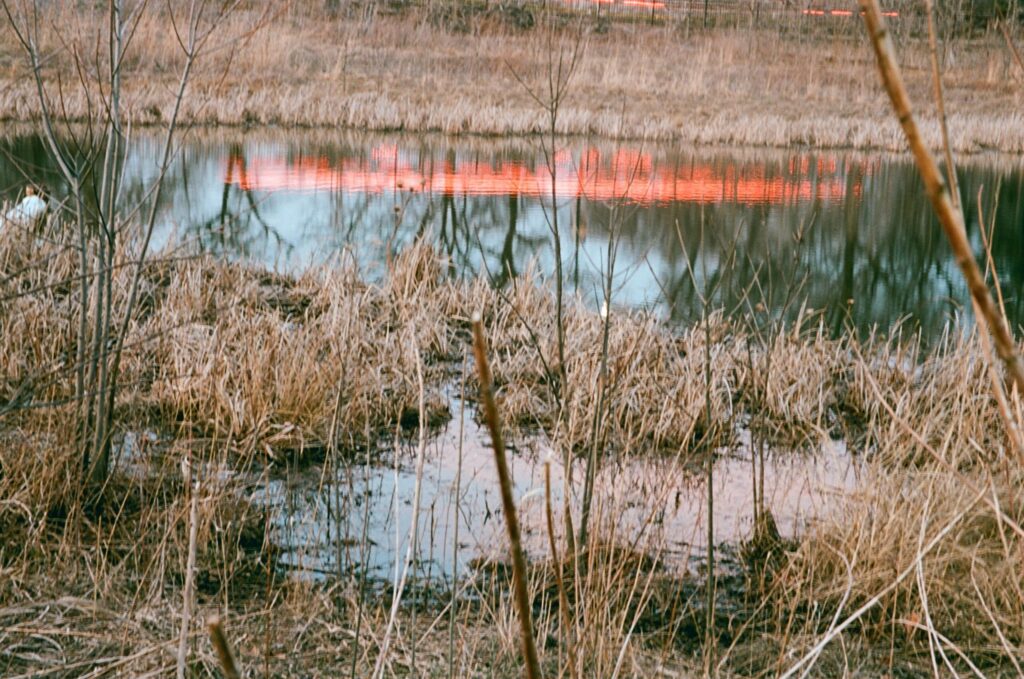
I assume the red on the water is reflections from the busy street that’s just out of frame, but I don’t remember exactly what the scene looked like in real life.
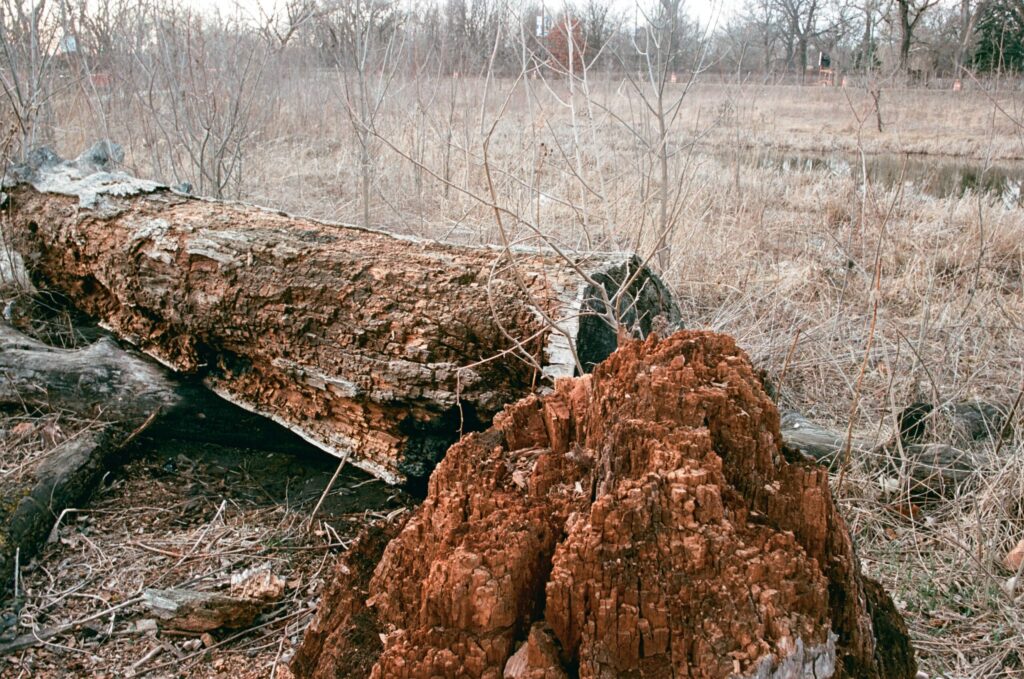
This film stock captures a ton of detail, which makes sense, since it was originally an aerial surveillance film.
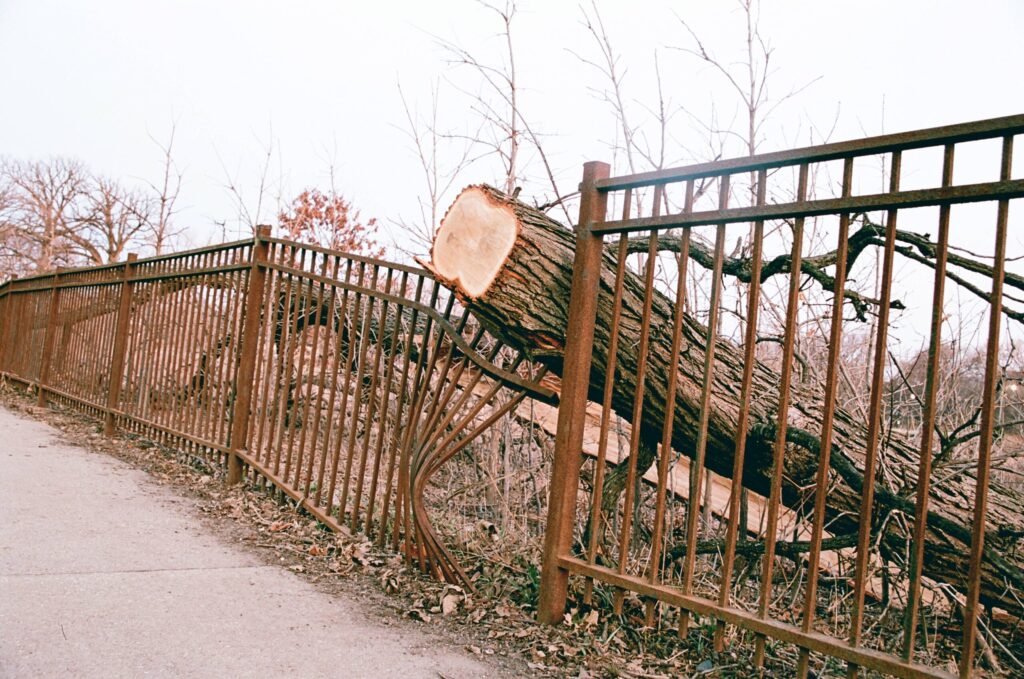
Six seconds at f/6.7. I rounded up on the reciprocity calculator, but I really don’t think I needed to.
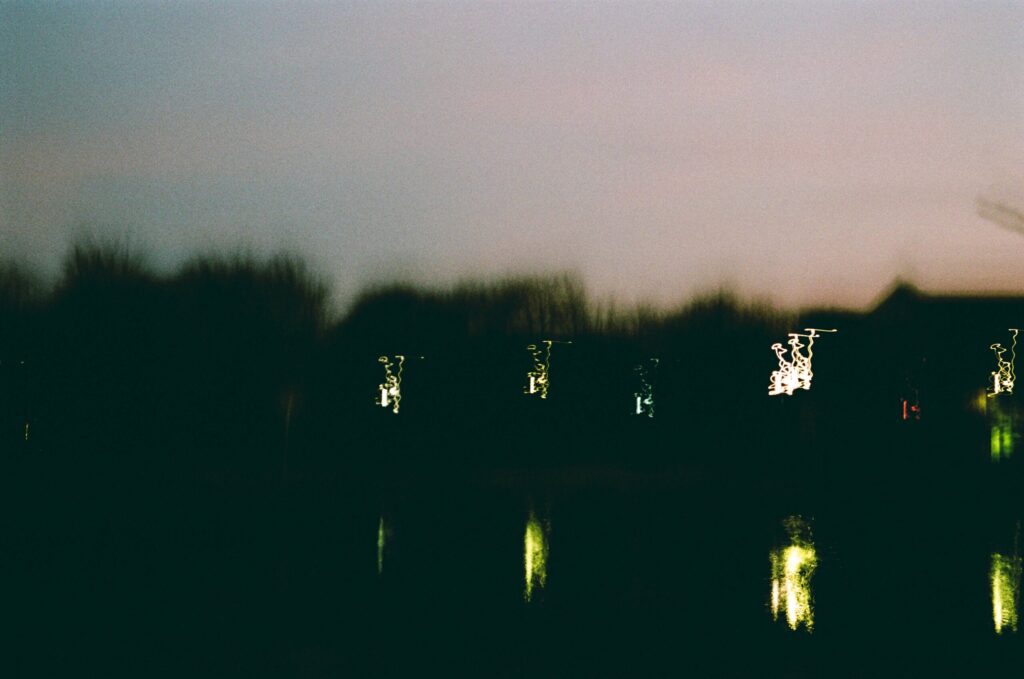
This was me realizing my shutter release cable had gotten stuck and taken about four frames of the log from the previous photo.
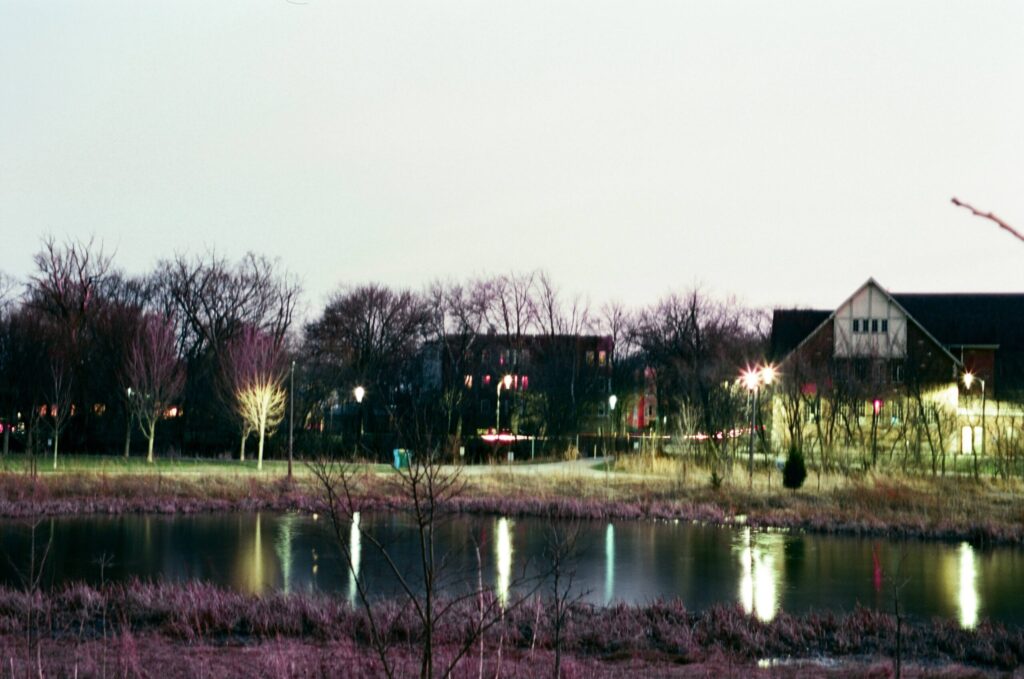
Seven minutes at f/22, and boy do I adore this shot. The colors! The contrast! The reflections! The star-burst lights! I’d been shooting a lot at wide apertures ever since I got my f/1.4 lens, but this has me questioning those life choices. It could be sharper, but what can you do.
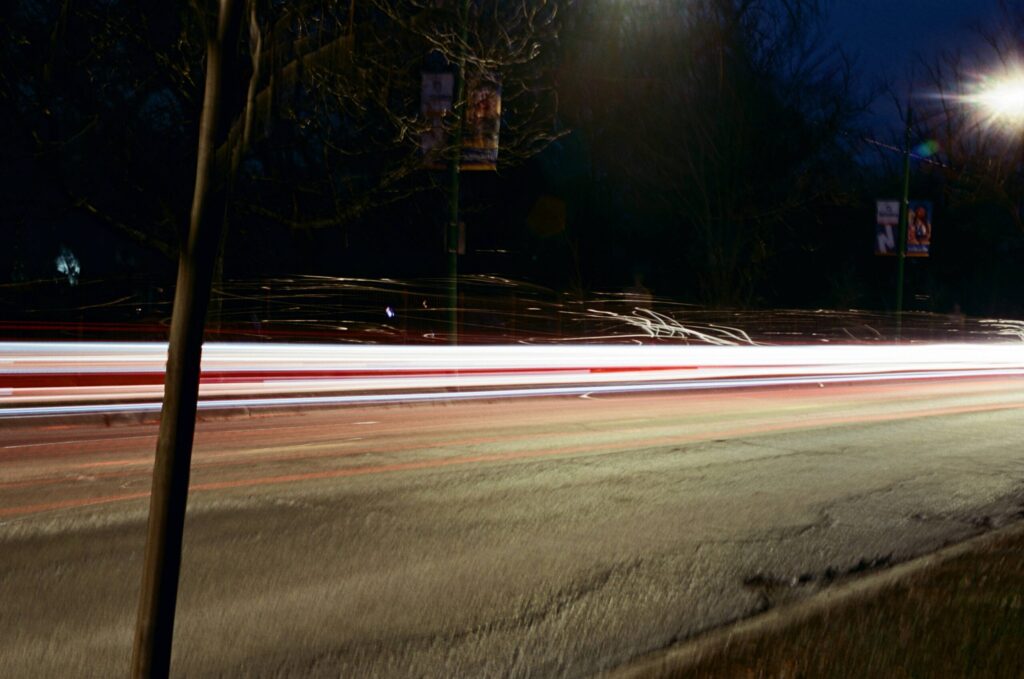
I technically got what I was looking for here (light trails from the car headlights & brakelights), but it’s compositional nothingburger. We’ll call it proof of concept and move on. Ninety seconds at f/16.
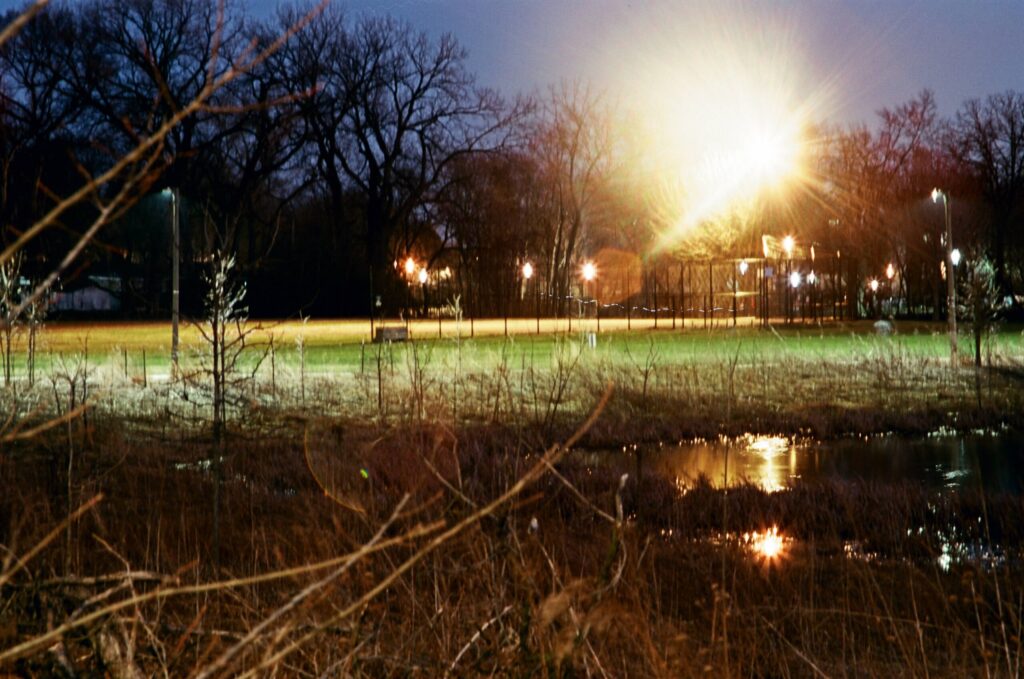
Another keeper. If it weren’t for that one light overpowering the scene, this would be perfect to me.
So, it turns out I love night photography. Standing around for seven minutes straight reading fanfiction on my phone while holding the shutter release cable can be a bit awkward, but the results are a lot of fun. I didn’t know what to expect, but I was pleasantly surprised at how it transformed the Elektra 100. I like the reddish-brown hues the Elektra has during the day, but I loved how saturated the colors became at night.
Most importantly, I’m now really excited to try out the roll of FPP Low ISO 1.6 that’s been sitting in my fridge. It’s nice to know I won’t be stuck only shooting it under Sunny 16 conditions. I’m normally the kind of person who’s in bed by 10 P.M. most nights, but I suspect once summer hits and the nights are more consistently comfortable, I’ll be found skulking around the local nature preserve at night like a tripod-wielding cryptid.

Related Posts
Pushing Street Savvy 400: I Told You So

Shooting Harman Phoenix From Both Sides with a Lens Splitter
